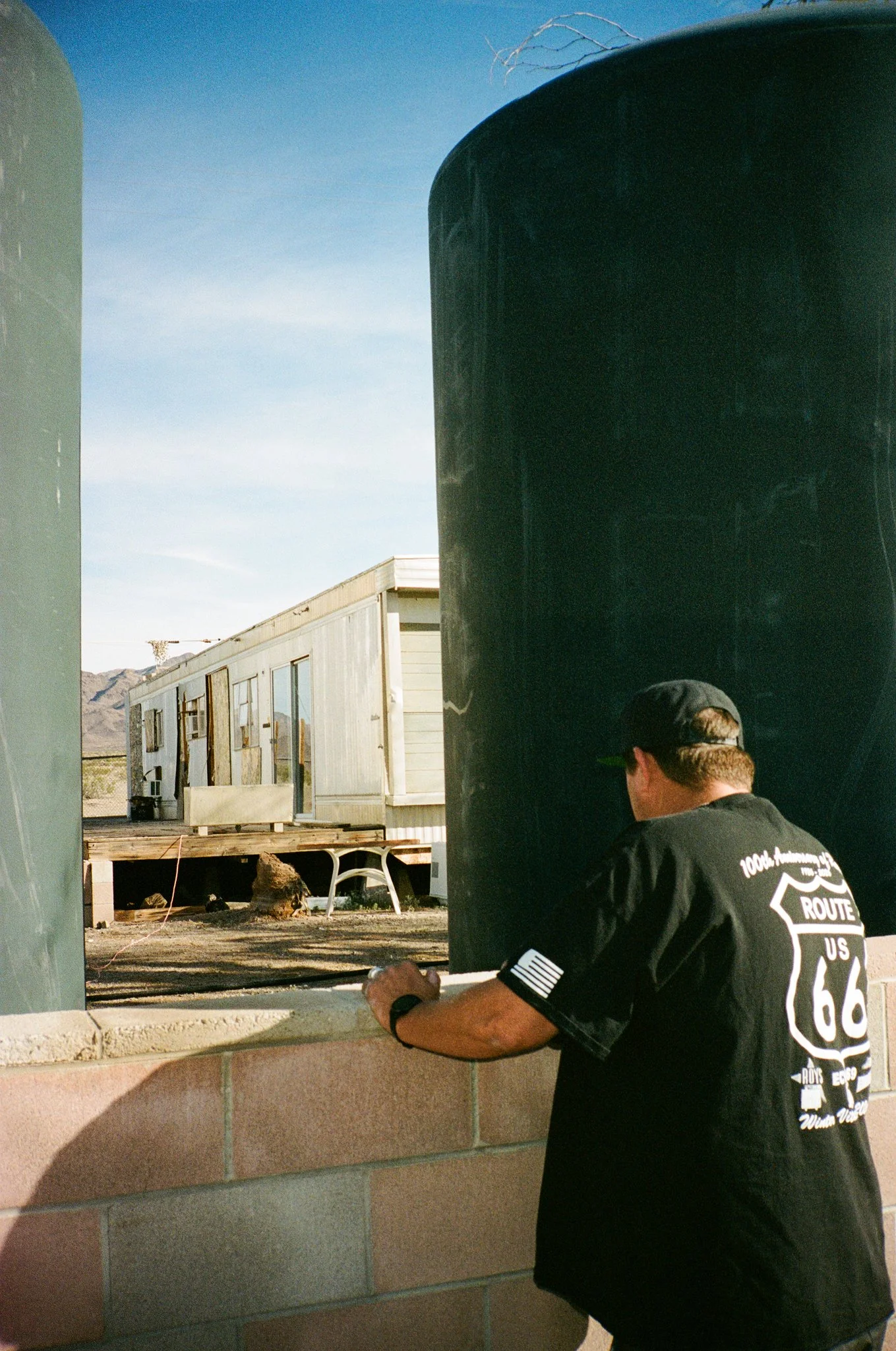
The Desert MacGyver
Ken Large • Manager, Town of Amboy
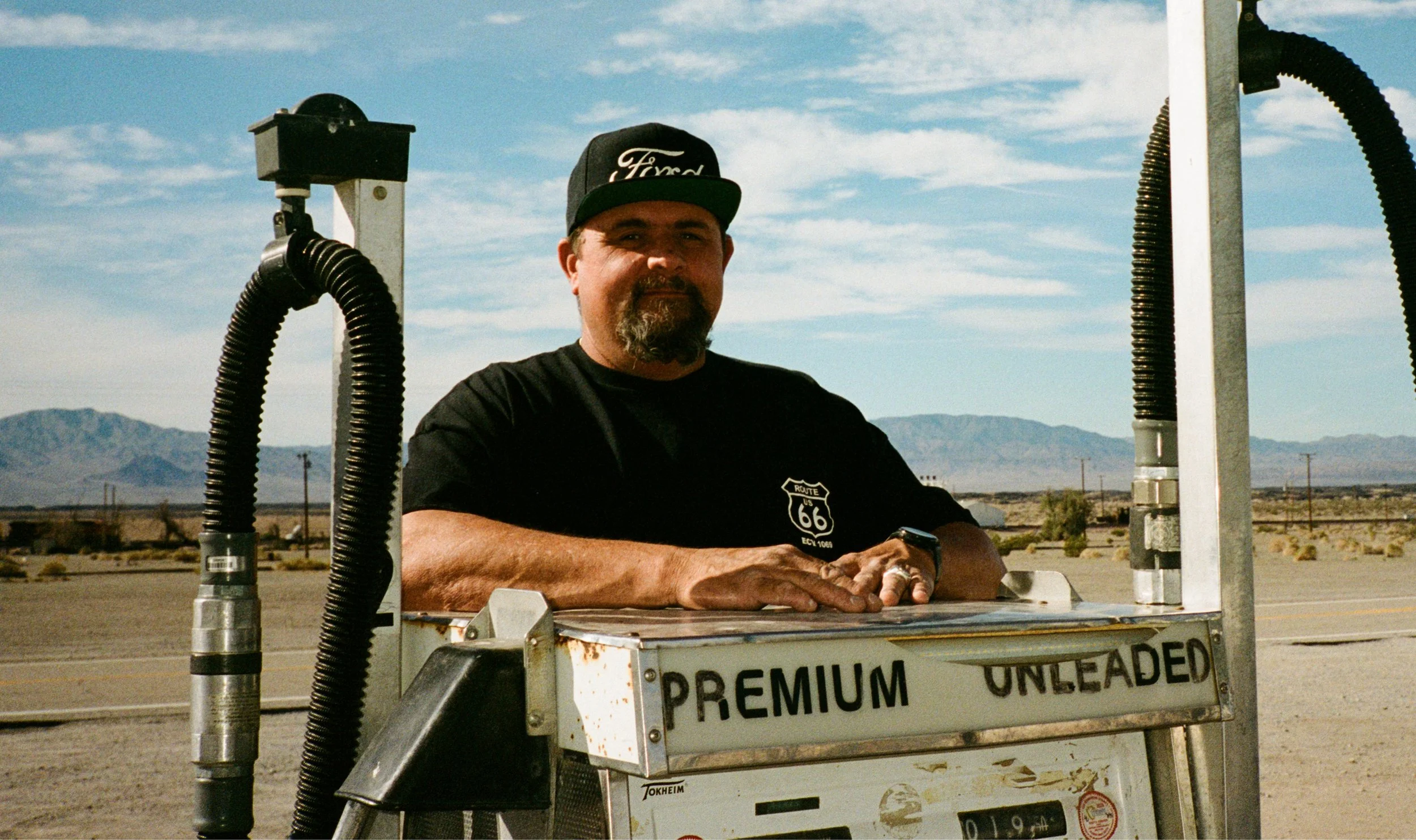
Ken Large, interviewed in Amboy, March 2026
How would you describe Amboy?
It's that rare spot in America where no one's fighting with their neighbors, no politicians care about you, and nobody cares who you voted for. Everybody's just happy to be here. The international visitors — and they make up eighty-five, ninety percent of the people who come through — a lot of them read “The Grapes of Wrath” in their own language, in school, twenty years ago, and they've been saving to come here ever since. They get here and they just want to celebrate their version of vintage America. And there are no angry people. No bad things to look at. You come here after sunset and it's not like turning off a building. It's like turning off a town. Just quiet. If you want dark, you can have dark.
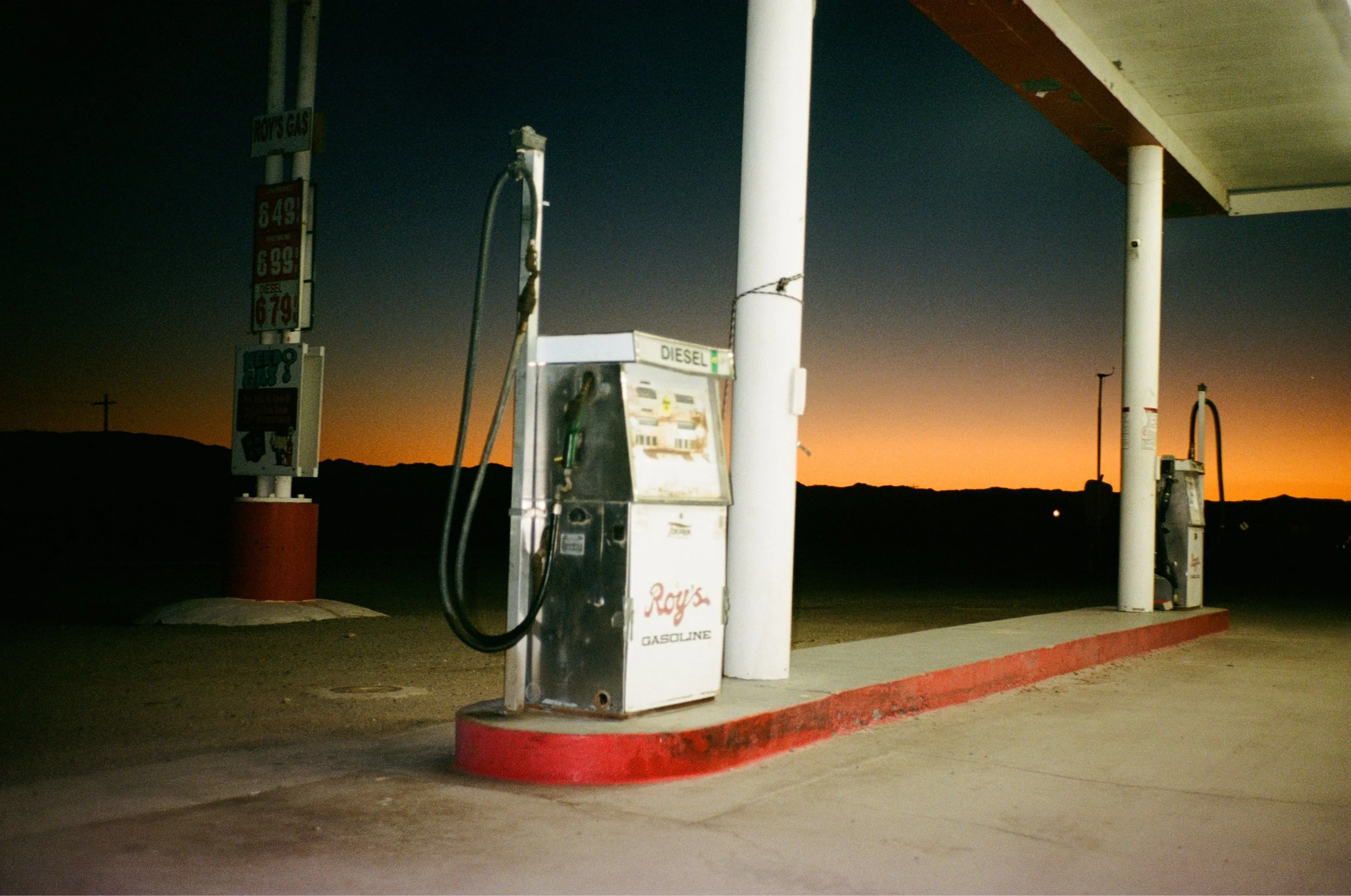
Roy's gas pumps at dusk. The station has been operating in some form since 1938, one of the few original Route 66 businesses still selling fuel.
What does a typical day look like?
I try to bounce between store stuff, construction stuff, and promotion stuff and make it somewhat even. I do computer work until my eyes hurt, then I go work on something outside for a while. The problem is there's three or four people's worth of things to do, and it's hard not to jump around. My big thing is finishing one thing at a time. We've got a million things to do — we can finish them one at a time. I try to have a plan. I'm not good when I do random.
Christmas Eve about four years ago, the guy who used to work with me said, looks like you're not gonna be off for Christmas. He said there was either water or gas coming out of the ground by the diesel pump. It was water. The water main in Amboy runs across the street at an angle — of course it does, you'd think it comes straight down from the fire hydrant, but no. When I dug it up, someone else had dug it up at least five times before and just spliced it back together with mismatched pipe.
A lot of my work is undoing other people's workarounds. People without means tried to fix things for decades, and they left it in layers. You dig something up and you find four different sizes and colors of pipe in the same section. Nobody ever installed shutoff valves, so you couldn't isolate a problem — they'd just run a new line from point A to point B and leave the old broken one underground. I went around and installed valves so you can actually shut sections off and find the leak. Nobody did that before me.
“A lot of my work is undoing other people’s workarounds.”
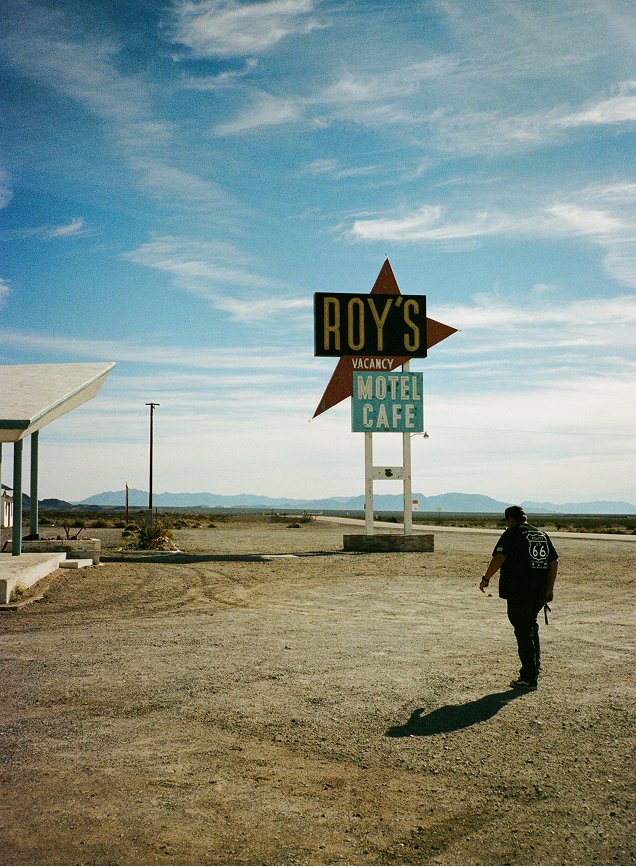
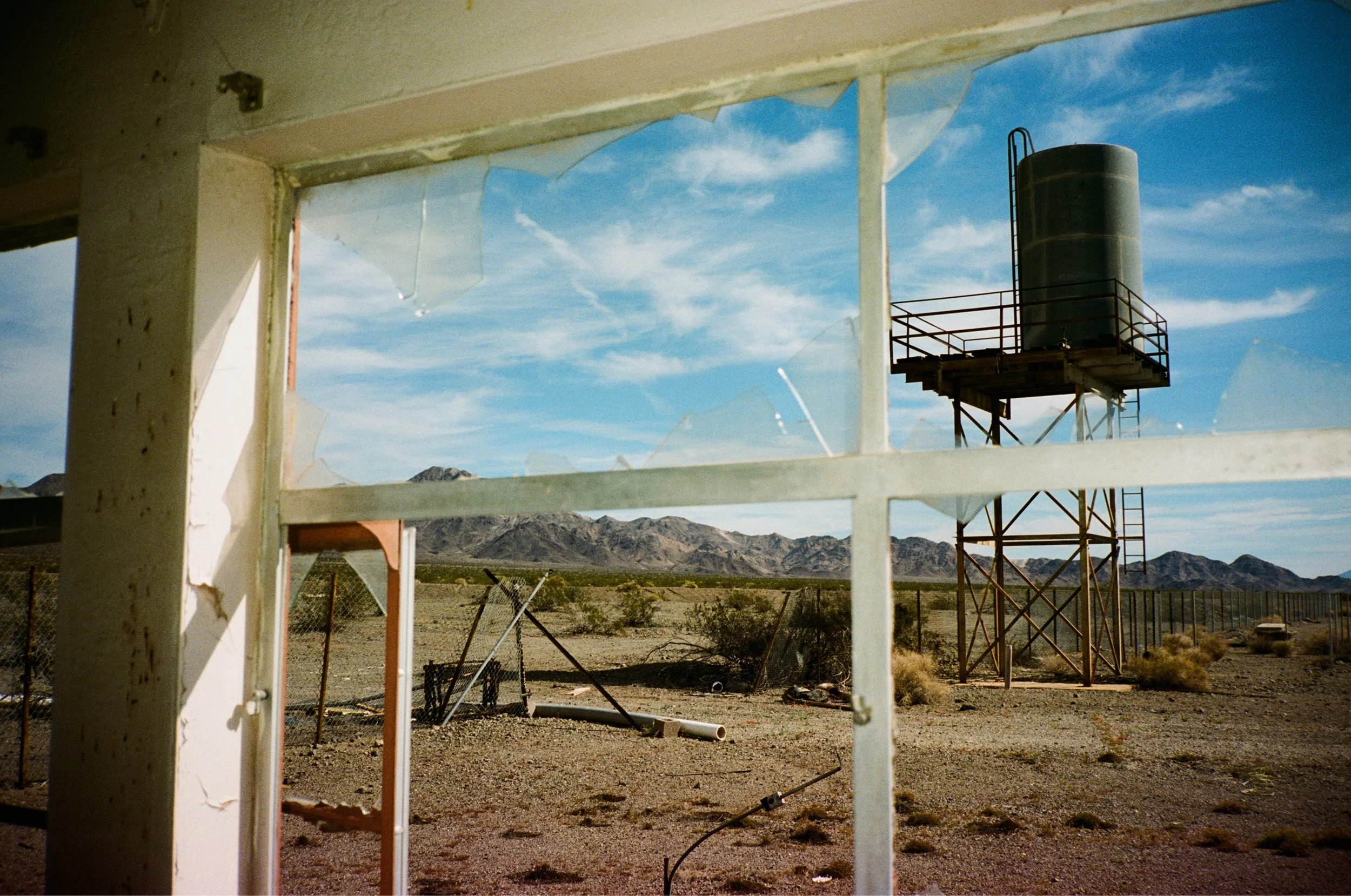
Inside Amboy in the early years of restoration. Years of deferred maintenance had left much of the town in a state of advanced deterioration.
What is the one thing Amboy most needs right now?
Water. Just think about it for nine seconds and it gets obvious.
There's no legal way to haul water into San Bernardino County anymore — that was closed off. The well nine miles northeast of town produces water that's too mineralized to use long-term. My current plan involves getting a four-inch pipe under the railroad tracks from one side to the other, which will probably cost one to three million dollars, plus a water treatment facility after that. I'm working a two-pronged approach: there's a bureaucratic path through the county, then the state, and then hopefully a conditional use permit based on Amboy being a historical town that's always had water. And there's a technical path where somebody who actually understands desalination comes in and tells me what's realistic out here.
The county is coming to do a phase-one walkthrough of the entire town. Phase two, according to the email, says — and I'm quoting here — "subject to findings of phase one." That's all it says. So we'll see.
In the meantime, I'm running water pipe to the motel cabins and putting in a little on-demand sink that runs off a sparkletts bottle. Get the toilet and the sink working in at least one cabin. Run it off the hauled water. Get it usable. You take it one thing at a time.
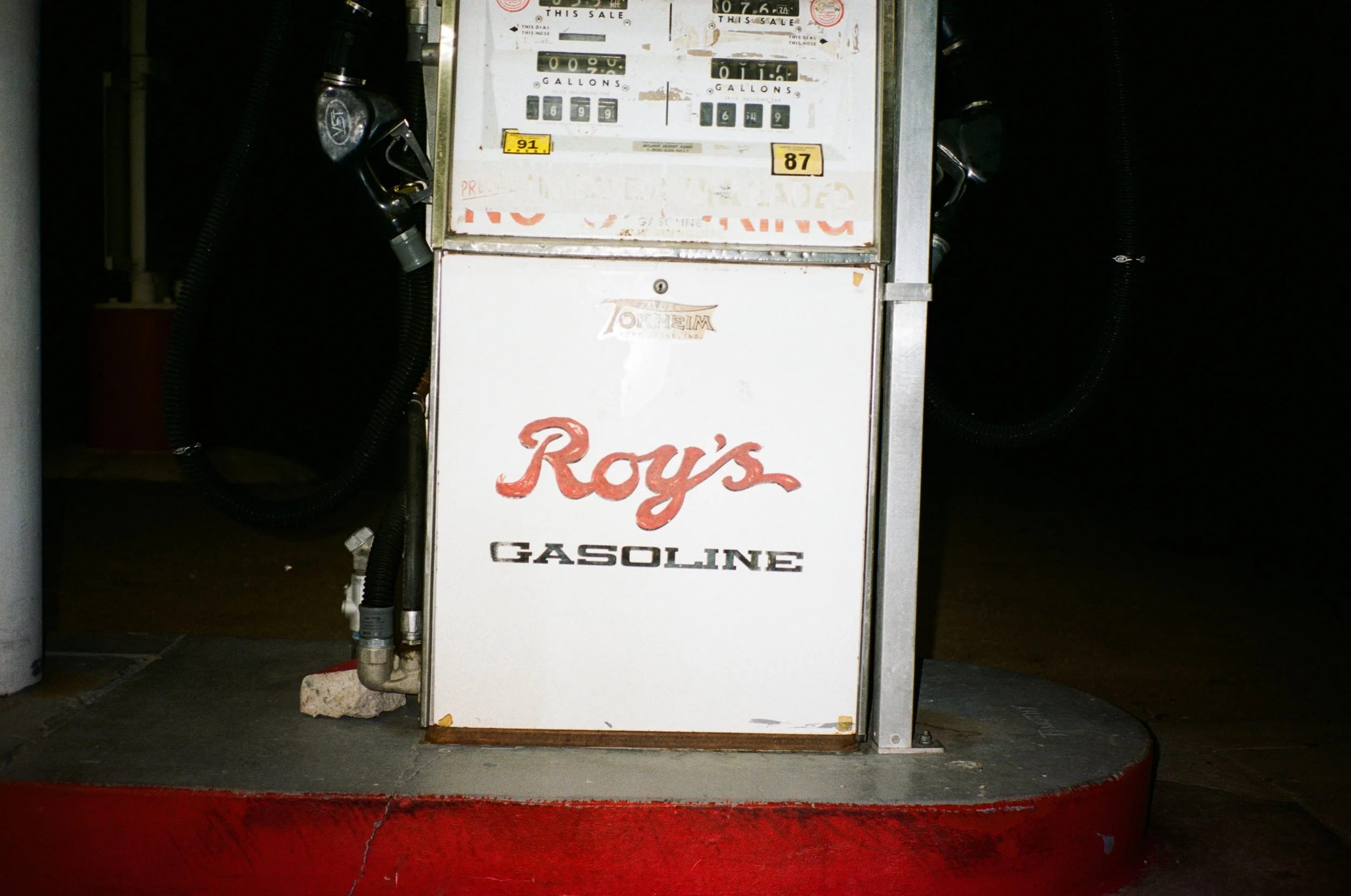
One of the operating gas pumps at Roy’s Motel & Café, where travelers have stopped for fuel since 1938.
What keeps you here?
I came here a couple of times in the seventies when I was a little kid. When I was in high school, in the nineties, I came back and tried to get gas and Buster came out and locked up the pump right as I pulled up. Said sorry, no gas till tomorrow. It killed our trip — we had to limp fifty miles back to 29 Palms on fumes. I never thought about this place after that.
And then Jonathan spent a year texting me every few days. After a year, I drove out here. Walked to the cemetery. Looked at the graves outside the fence. Needed to know why. Spent six months figuring it out while I was already working here.
I think it's the people. Every person I need who has a specific piece of knowledge — they come through. Art Parker, who's pushing eighty now, his family leased this place in the sixties and seventies. He came and told me exactly where the pipes ran under the ground, how deep you could dig before you hit salt muck, because he'd done it with his dad as a kid. My friend Martin — he's a seventy-year-old man from Amboy, rides a custom three-wheeled e-bike, comes by and picks up recycling cans from houses around town for fun. Turns out he's in the 1961 Amboy yearbook. I didn't know that when I met him.
The biggest best thing about this place is that none of the people who love it care what color I am, don't want to fight with the neighbors, they're all just happy to celebrate what they think is the ideal America. And I get it. Even the international visitors — they got taught about the Mother Road in school. They don't have this. Their roads are little, everything's already old, their cars are small. And then they get here and they're just amazed by the space.
You can't do this alone. You need people who are in love with the place. That's the only thing that works.