The Boy Who Inherited a Ghost Town
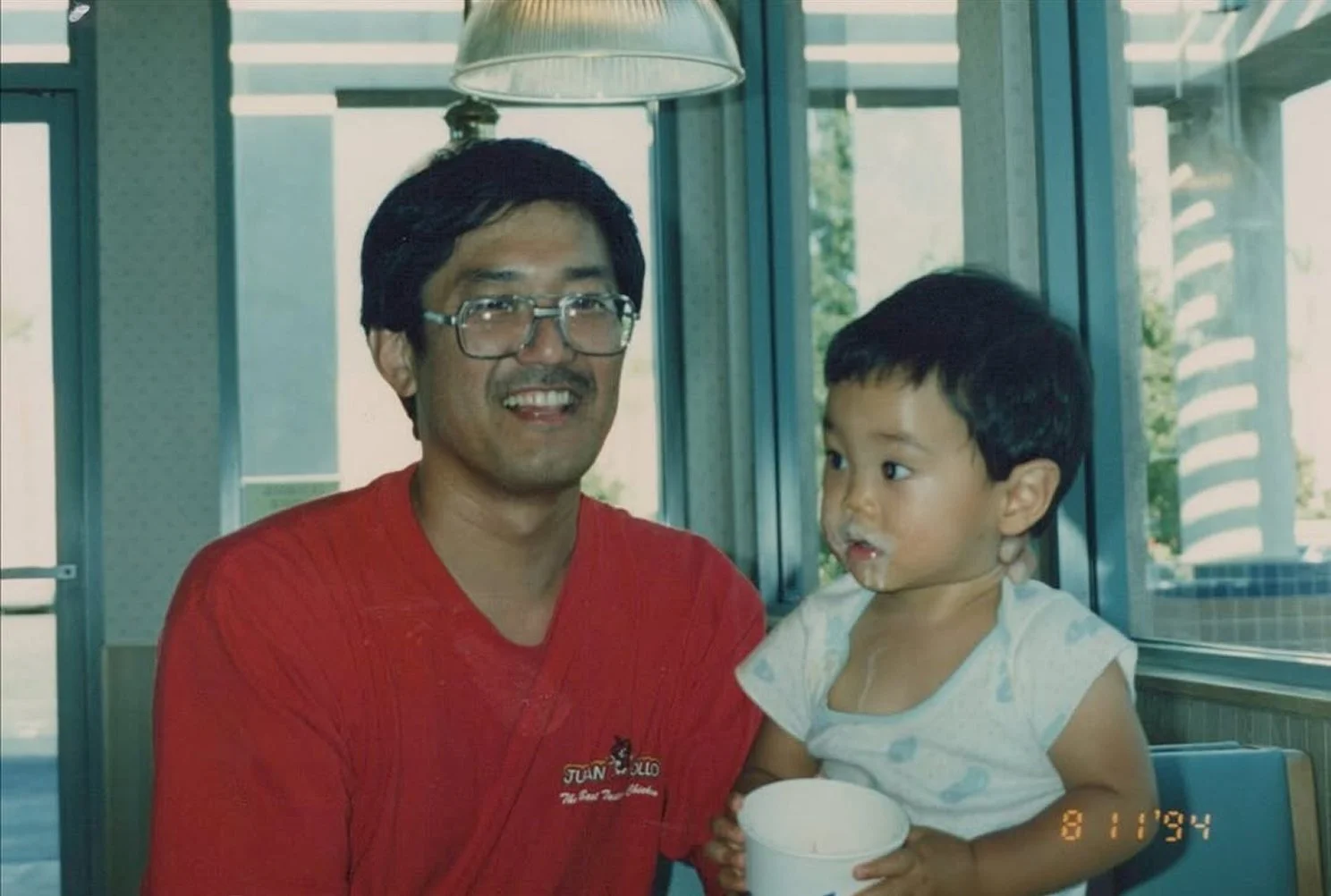
Albert Okura (1951-2023), Kyle Okura • Owners, Town of Amboy, California
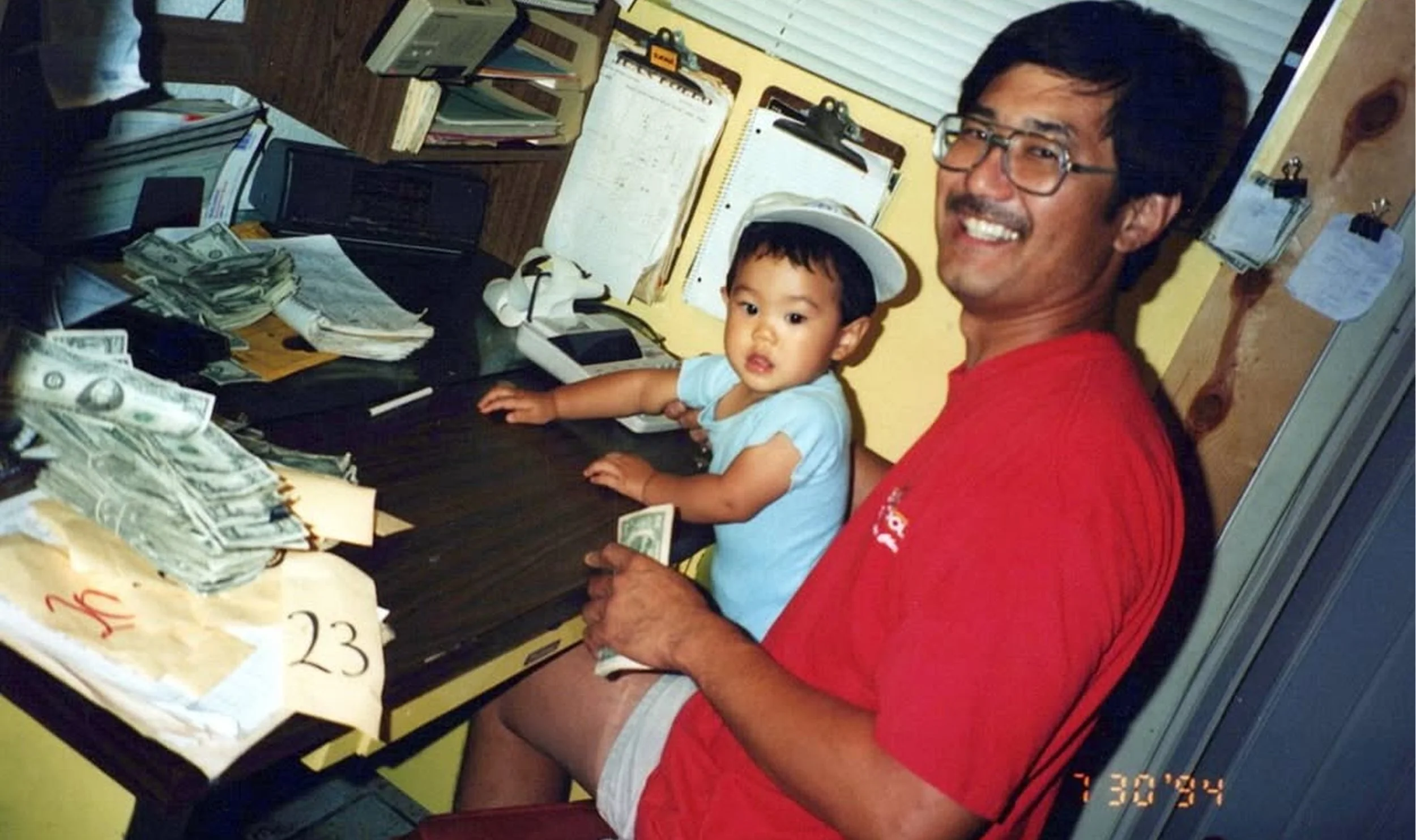
Albert and Kyle Okura, July 1994. Albert would buy Amboy eleven years later.
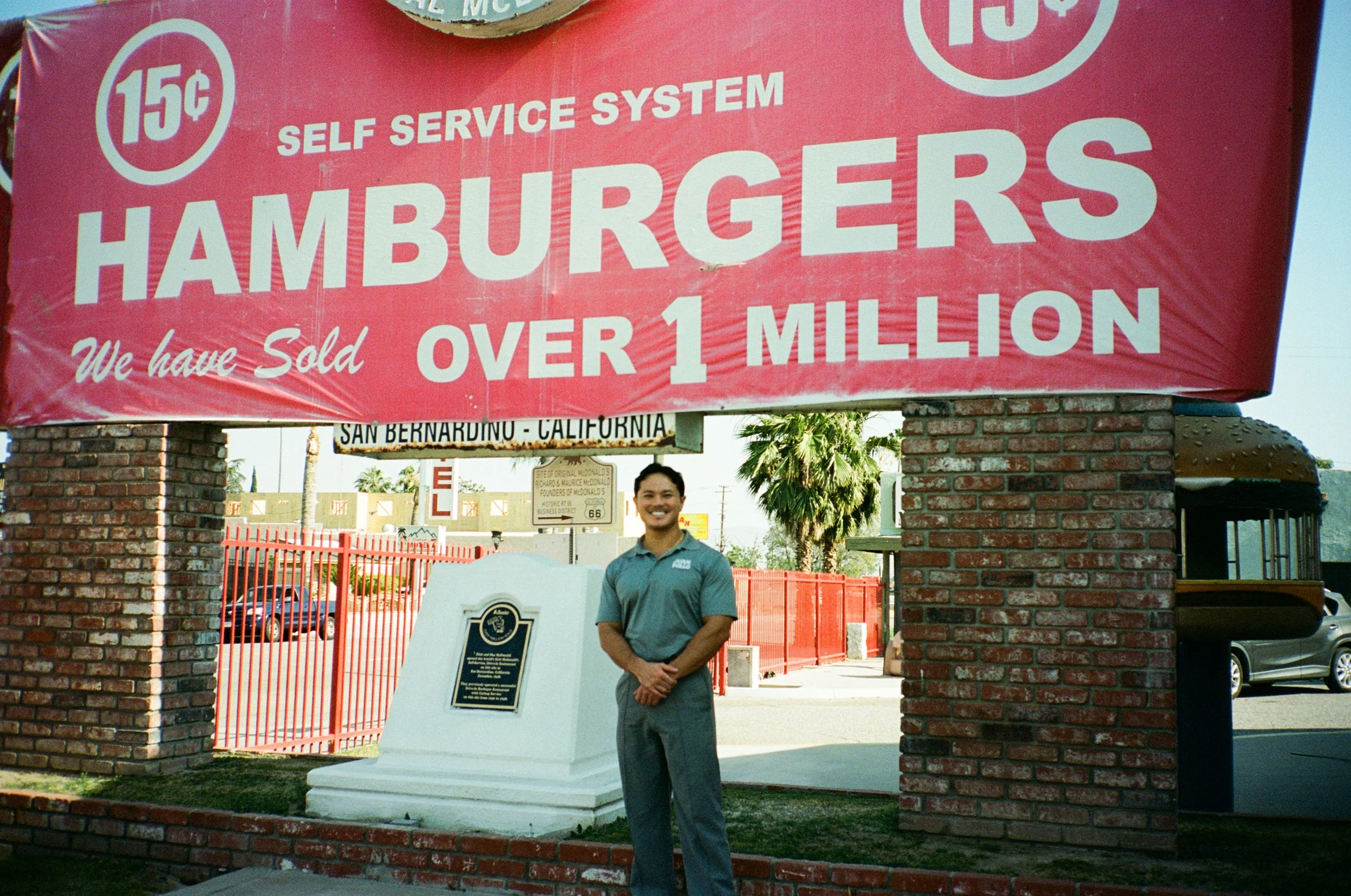
Kyle Okura at the original McDonald’s Museum, founded by his father, Albert Okura. San Bernardino
Kyle Okura, interviewed at the McDonald's Museum, San Bernardino, May 2026
Your father talked a lot about destiny. Do you believe that about Amboy?
I didn't always. When I started helping out in 2016, I was doing it for him. I wanted to see that look — you know, where he's proud but he doesn't quite say it. So I built the website, designed the merchandise, started getting deeper into operations. And it slowly consumed half my life.
I don't think I really understood what Amboy was until after he passed. When he was alive I was doing it for him. After he was gone I had to ask myself — who am I doing this for now? And what I realized, being out there, talking to the people who come, is that this project is so much bigger than me or my dad or our family's legacy. People fly in from across the world. Some of them have been saving for twenty years to drive this road, ever since they read about it in school. Every single one of them has a smile on their face when they get there. How could you quit on something like that?
Walk me through the moment he told you he was buying a town.
I was twelve. He comes into my room and says, Kyle — I'm going to buy a town. I didn't even know that was possible. I said, wait, with people in it? He said no, no, a ghost town. I said why. And his only answer was: who else do you know that owns a town? That was it. No further explanation.
Everyone around him thought it was a ridiculous idea. His colleagues, my mom's family — people who understood the numbers. None of them could see the vision. And my dad was the kind of person where the entire world could be against your idea, even the people you respect the most, and if he believed it, he was going to do it. He wasn't the sharpest tool in the box — he'd admit that himself. He wasn't a finance guy. He just had a lot of courage and he'd say, yeah, we're doing it, and we'd deal with the repercussions after.
“He comes into my room and says, Kyle — I'm going to buy a town. I didn't even know that was possible. I said, wait, with people in it? He said no, no, a ghost town. I said why. And his only answer was: who else do you know that owns a town? That was it. No further explanation. ”
What were the hardest years?
2019 to 2021. I was spending fifty, sixty percent of my time on Amboy while still running marketing for Juan Pollo. Our main manager got really sick — he'd been there nearly ten years — and then he passed away. Within days, every single employee quit at once. A conflict between two groups and they all walked out. Three days to figure out how to run a gas station we'd never operated. We didn't even know how to turn on the pumps.
So it was me and one of my best friends. He moved out there and worked open to close six days a week. I drove out on weekends. Neither of us knew what we were doing. And then COVID hit. I remember having a real conversation with my dad — should we give up on this? Not sell it, just, is this worth what it's taking? And he said: whatever you do, Kyle, do not sell this place. That was it. So we just kept going.
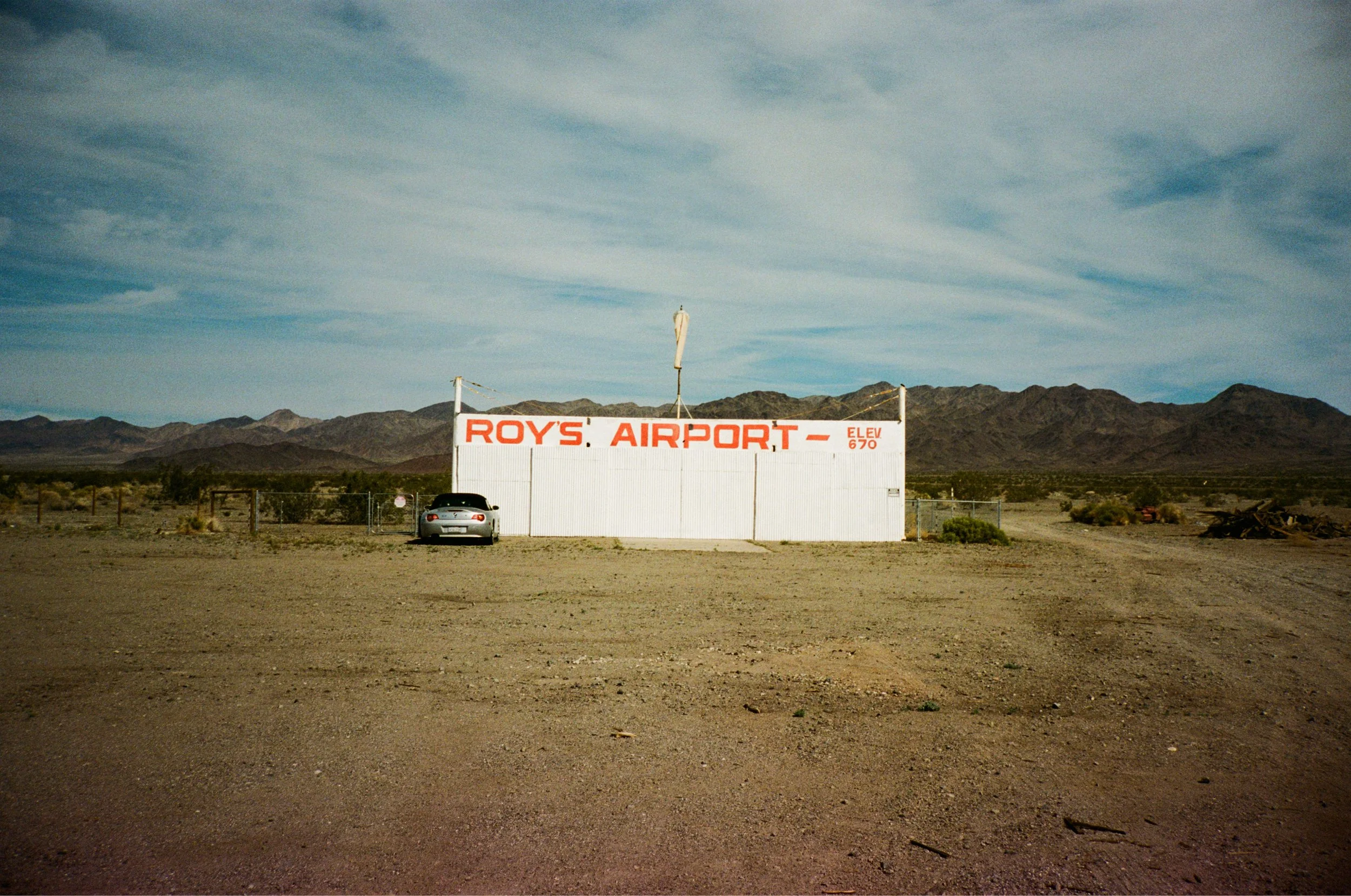
Roy’s Airport, Amboy, California. Built in the 1940s, the private airstrip became part of Albert Okura’s effort to reimagine Amboy as a destination rather than a stop along the highway.
Tell me about the fly-in.
We'd just restored the Roy's sign — a neon specialist took the whole thing apart, replaced the tubes, repainted it. I'd never seen a photo of it lit up before. Turns out the main color is turquoise. You'd never know that in daylight.
I thought the only way you get people out to the desert is if something is happening. A guy from a flight association said, what if we combine the relighting with a fly-in? So we did. I laid out the parking map so that airplane VIP parking ran along the highway on both sides — I wanted anyone passing to see planes lined up and not know what to make of it. Seventy planes showed up. Twenty camped under their wings overnight. We did a countdown. Nicole threw the three switches and the sign came on.
My dad came out for that one. It was the last time I saw him genuinely excited about Amboy.
What were the breakthroughs — the things he didn't get to see?
Three big ones: the septic systems, the backup generator, the electrical to the cottages. My dad had been trying to get those done since 2005. They all came together in 2023 — the year after he passed. Me and Cameron looked at each other and said, if he was just here one more year.
The car show was the same thing. First one, we planned it in a month, 200 cars showed up. Second one: 400 cars, 50 campers, three bands, a pinup competition, 22 vendors. And I'm standing there thinking — this is exactly what he would have loved. He just missed it. By one year, he missed all of it.
The water. What's the actual plan?
Cadiz. It's a town about ten miles east of Amboy with an extraordinary water table — palm trees, clean water, everything Amboy doesn't have. They have a water line running along the other side of the railroad tracks and they're already trying to commission it for other communities. What we need is a permitted crossing under the tracks and then 2,000 feet of pipe straight to Amboy. That's it. We've met with their representatives. They've done permitted undercrossings before. We don't have the final cost but it's a real plan with a real counterparty.
Once we have water we open the cottages. Once we have the cottages we open the café. And once the café is open, Amboy is a place you can actually stay, eat, sleep, and spend time in — not just photograph and keep driving. That's the whole thing. My dad knew it twenty years ago. We're just finishing what he started.
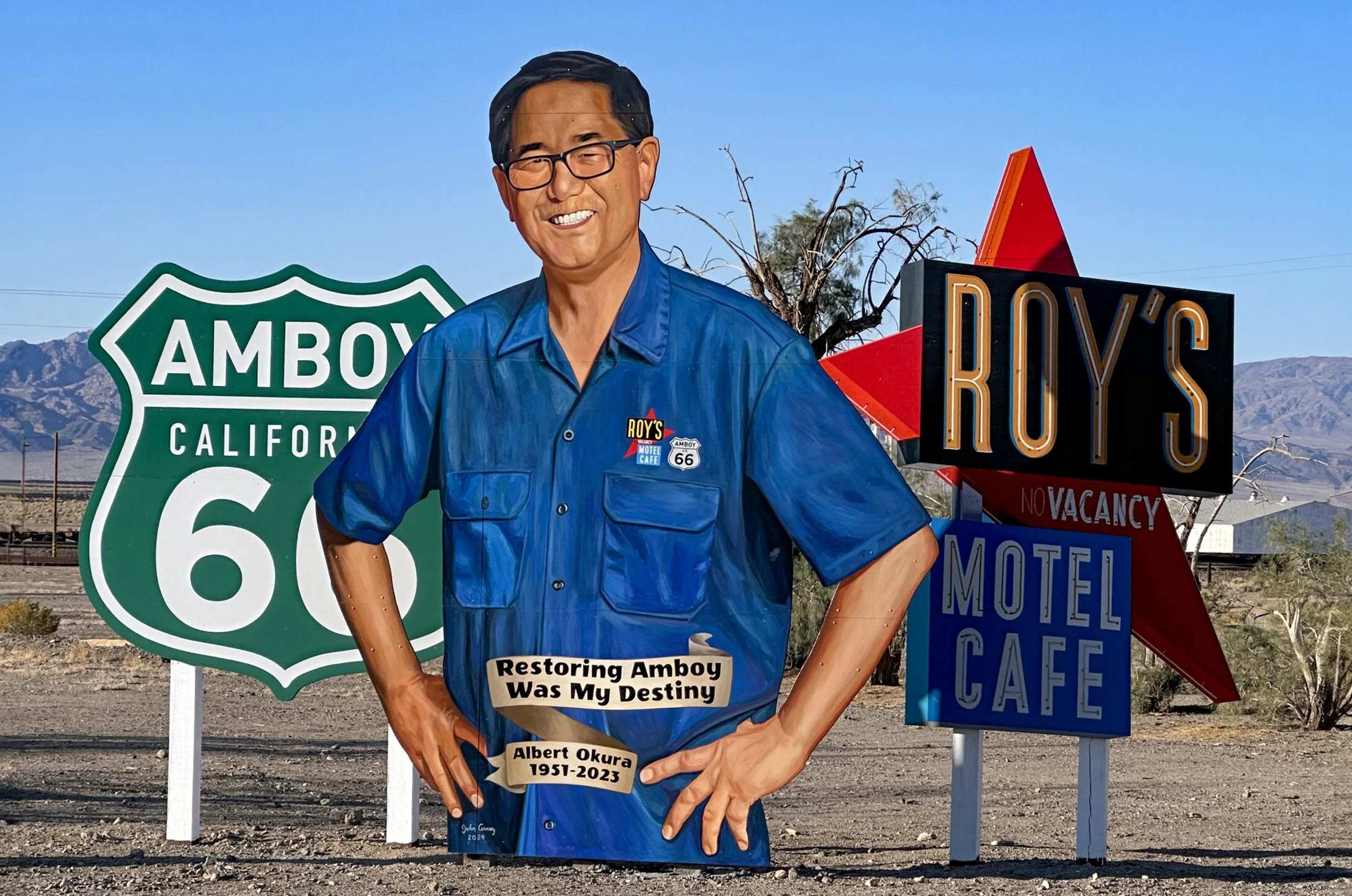
Kyle Okura speaks during the dedication of a monument honoring his father, Albert Okura.
The monument.
The Clampers — E Clampus Vitus, a fraternity dedicated to historical preservation — they'd already put up four monuments around Amboy. They offered to do one for my dad. I asked if I could write the inscription myself.
I timed it to land the same day as the murals — three portraits of my dad painted on the exterior walls by an artist who offered to do it for free in his honor. They look like they were planned together. They weren't. We poured the concrete the day before the dedication. It was windy. We stood there watching it set, not sure it was going to hold.
At the bottom it says: the man who saved Amboy. I wanted the whole world to know his story. I thought that was a way to make sure they will.