
Timeline
Amboy, California
Amboy’s history is a story of boom and bust, built on mining, railroads, and the automobile. For more than a century, its fortunes rose and fell with the people passing through.
1858
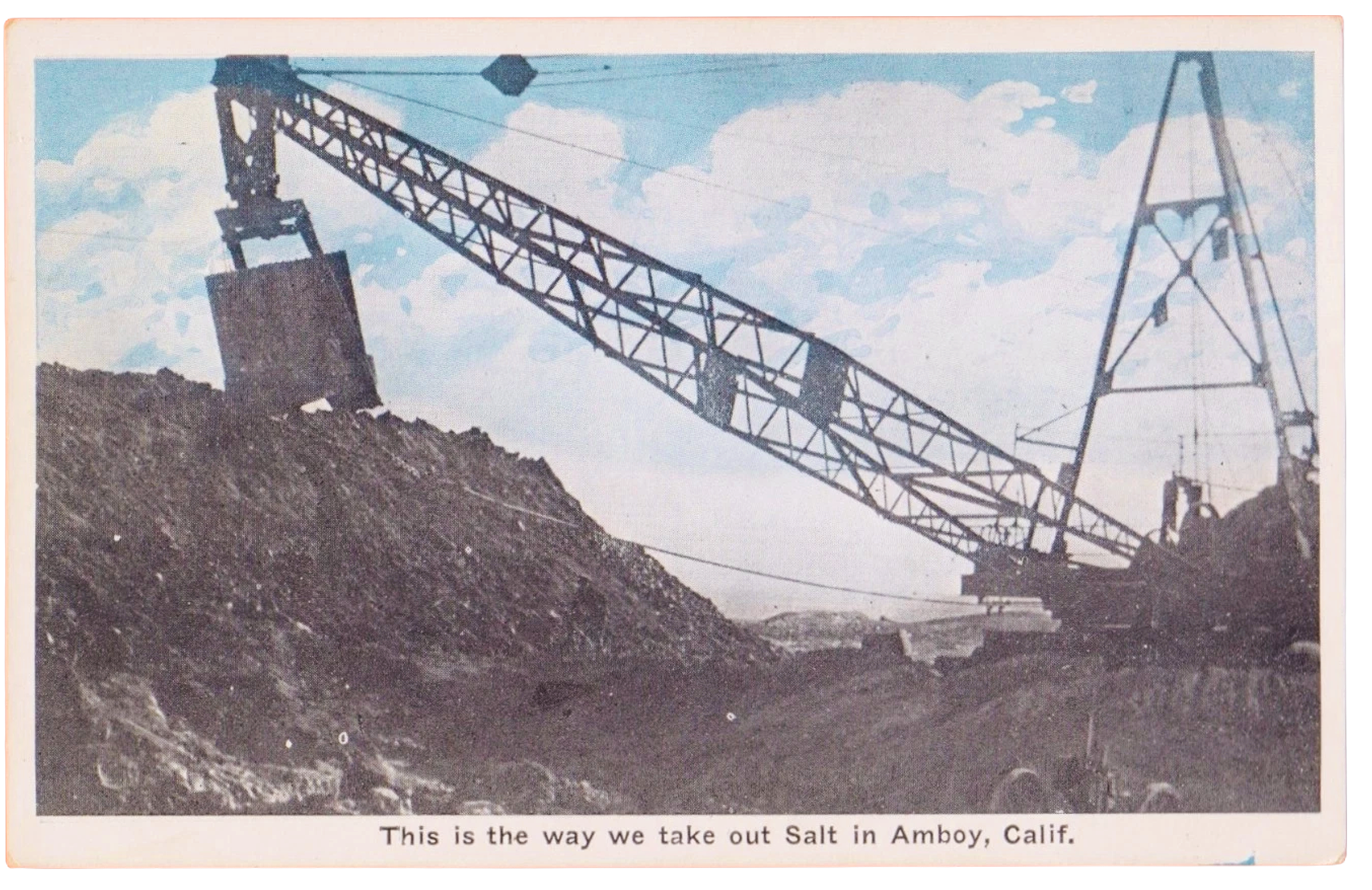
Area first settled by miners
Long before Route 66, the eastern Mojave attracted prospectors searching for gold, silver, and other minerals. Small mining camps established the first permanent activity in the region and laid the groundwork for the transportation networks that would eventually create towns like Amboy.
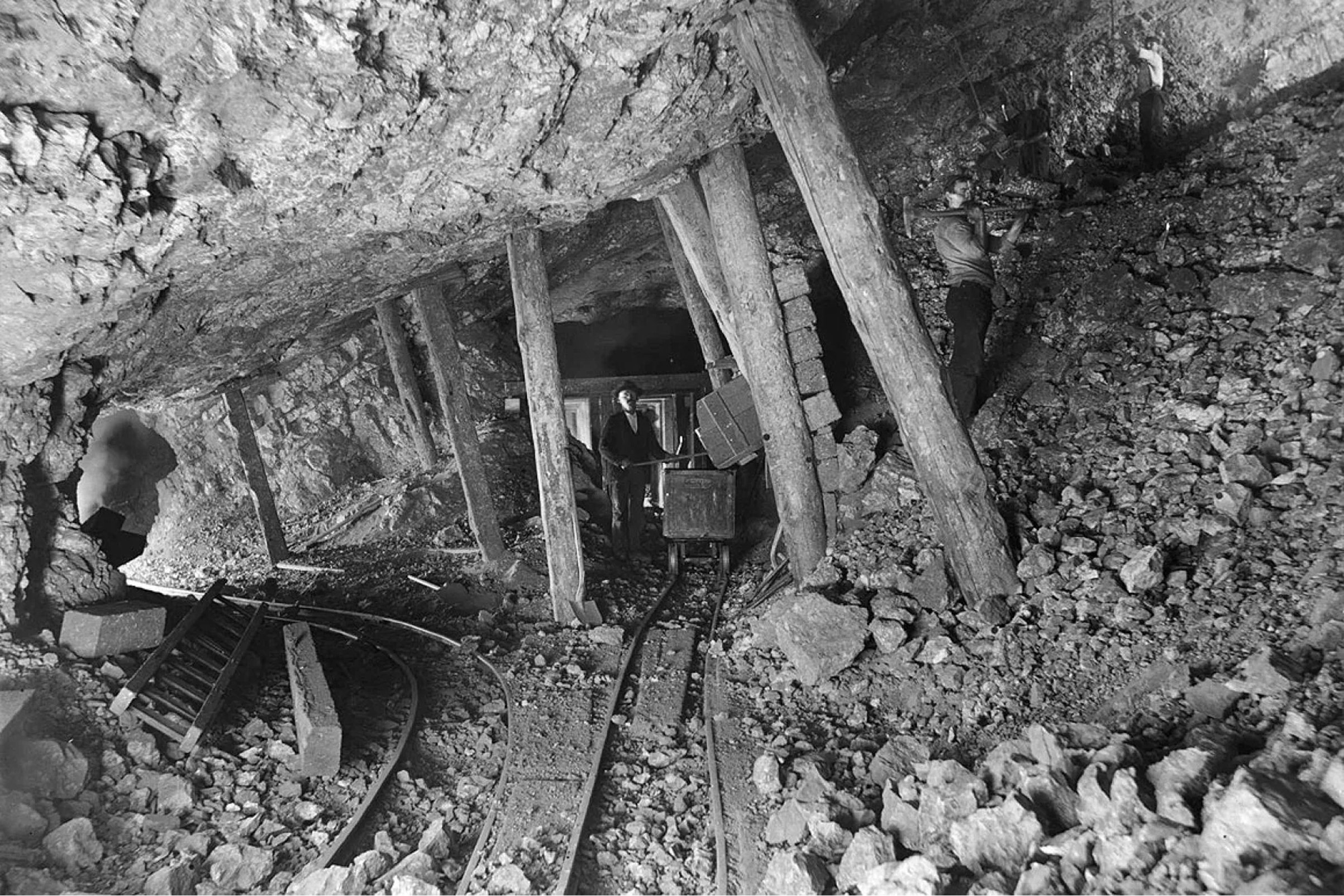
Several miners toiling 125 ft below in what is believed to be the Bagdad Mine in Ludlow, CA.
Courtesy of USC Libraries and California Historical Society.
1883
Founded as a railway station by the Atlantic and Pacific Railroad
The Atlantic and Pacific Railroad carved its way through the Mojave in 1883, establishing water stops spaced roughly twenty miles apart, the distance a steam locomotive could travel between refills. Amboy was one of these, named in sequence with its neighbors Bristol, Cadiz, and Danby.
The surrounding land also produced gypsum, processed at a mill in town and shipped west. That plant closed in 1924, the same year Roy and Velma Crowl’s car broke down on their way to Los Angeles. They stayed.
Looking east from Route 66 toward the Bristol Mountains. Amboy was one of four alphabetical railroad stops built by the Atlantic and Pacific Railroad across the Mojave in 1883.
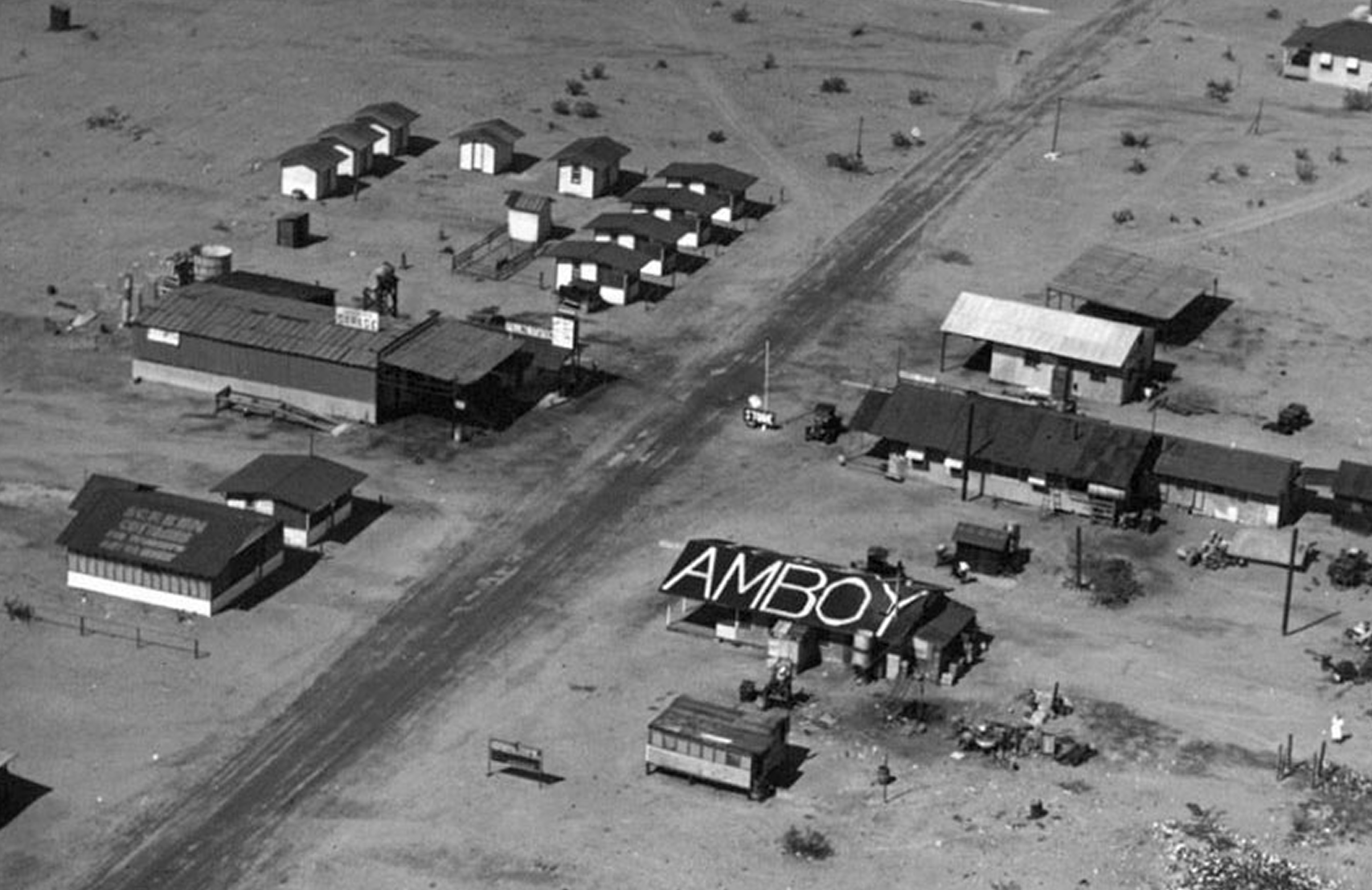
Amboy from the air, March 1925, one year before Route 66 opened. The building with "AMBOY" painted on the roof is approximately where Roy's Café would eventually be built. Photo courtesy of Charles O. Fortune.
Amboy from the air, March 1925, one year before Route 66 opened. The building with "AMBOY" painted on the roof is approximately where Roy's Café would eventually be built. Photo courtesy of Charles O. Fortune.
1926
Route 66 opens
On November 11, 1926, U.S. Route 66 was officially commissioned, running 2,300 miles from Chicago to Los Angeles. The section through the Mojave followed the path already laid by the railroad. For Amboy, it was the beginning of everything.
1938
Roy Crowl opens Roy's Motel & Café
Roy Crowl opened his gas and service station in 1938. His son-in-law Herman "Buster" Burris built a storeroom next to the garage to keep spare parts. Roy's daughter Betty turned the storeroom into a café. The small overnight cabins came shortly after. Roy's was soon operating around the clock with three shifts of mechanics working through the night on whatever broke down on the highway.
By the 1950s, the postwar boom had pushed Amboy's population to 700. Roy's employed 70 people. There were three competing service stations, two cafes, three motor courts, four garages, a post office, a church, and a school with its own board of trustees.
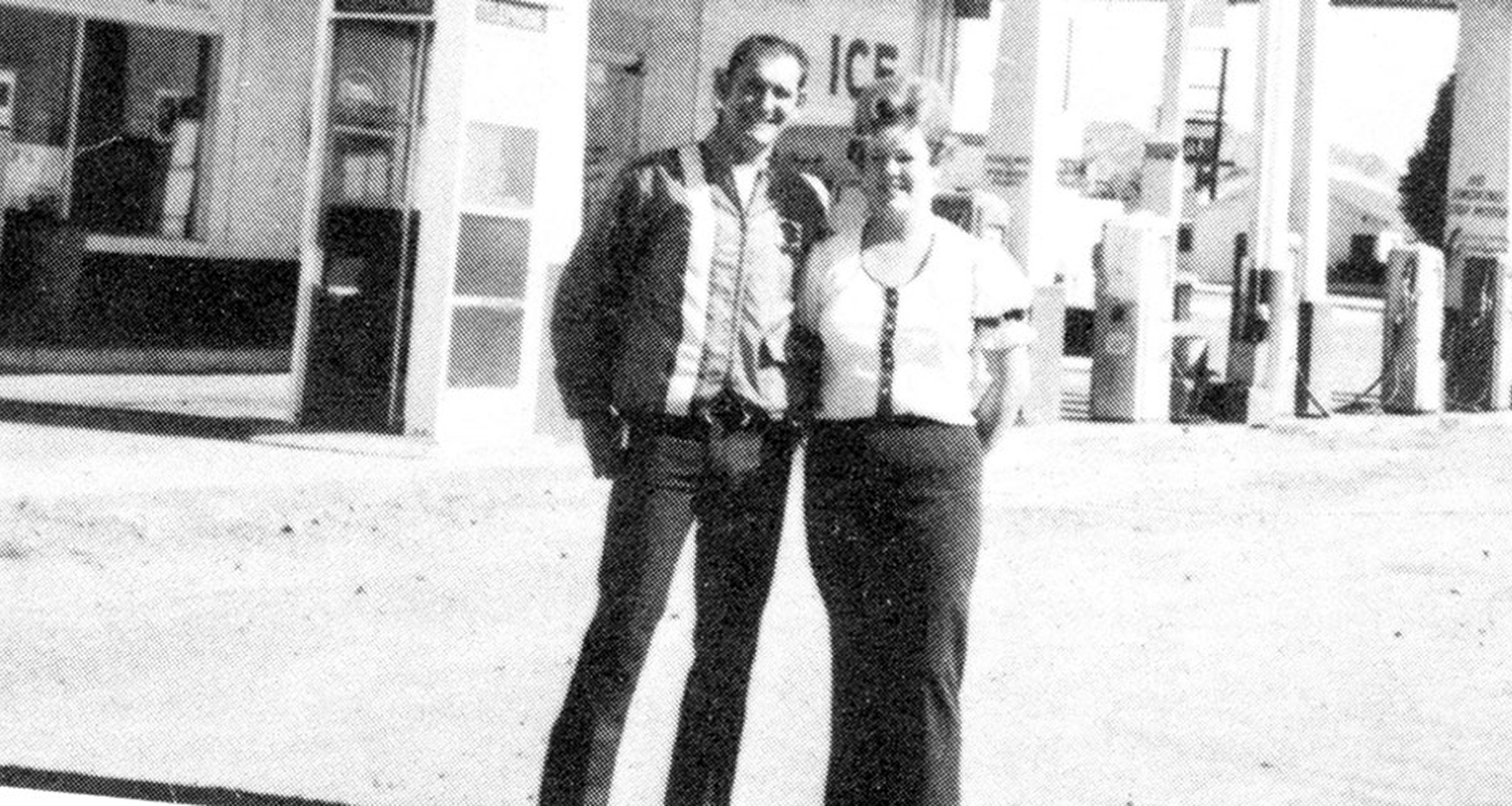
Dave and Jeannie at their Texaco station in Amboy. At its peak, the town supported three competing service stations along Route 66.
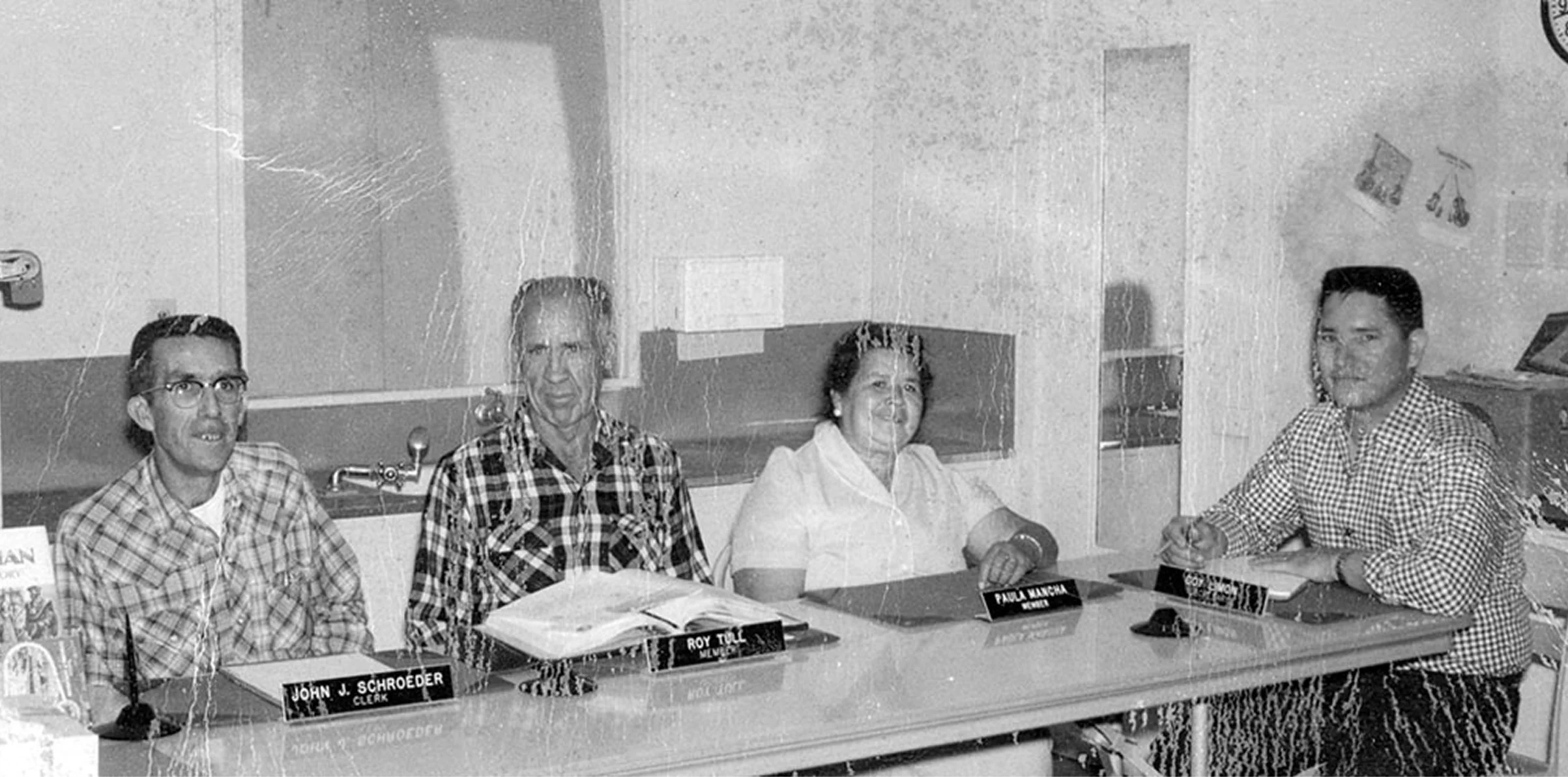
The Amboy School Board, 1950s. John J. Schroeder, Clerk; Roy Tull, Member; Paula Mancha, Member. A functioning school board for a town of 700.
1959
Roy’s gets its sign.
On February 1, 1959, Roy's erected the fifty-foot neon boomerang sign that would become one of the most recognized landmarks on Route 66, visible for miles in either direction across the flat desert floor.
That same year, the Googie-style reception building was added and Roy and Velma retired, turning the operation over to Betty and Buster Burris.
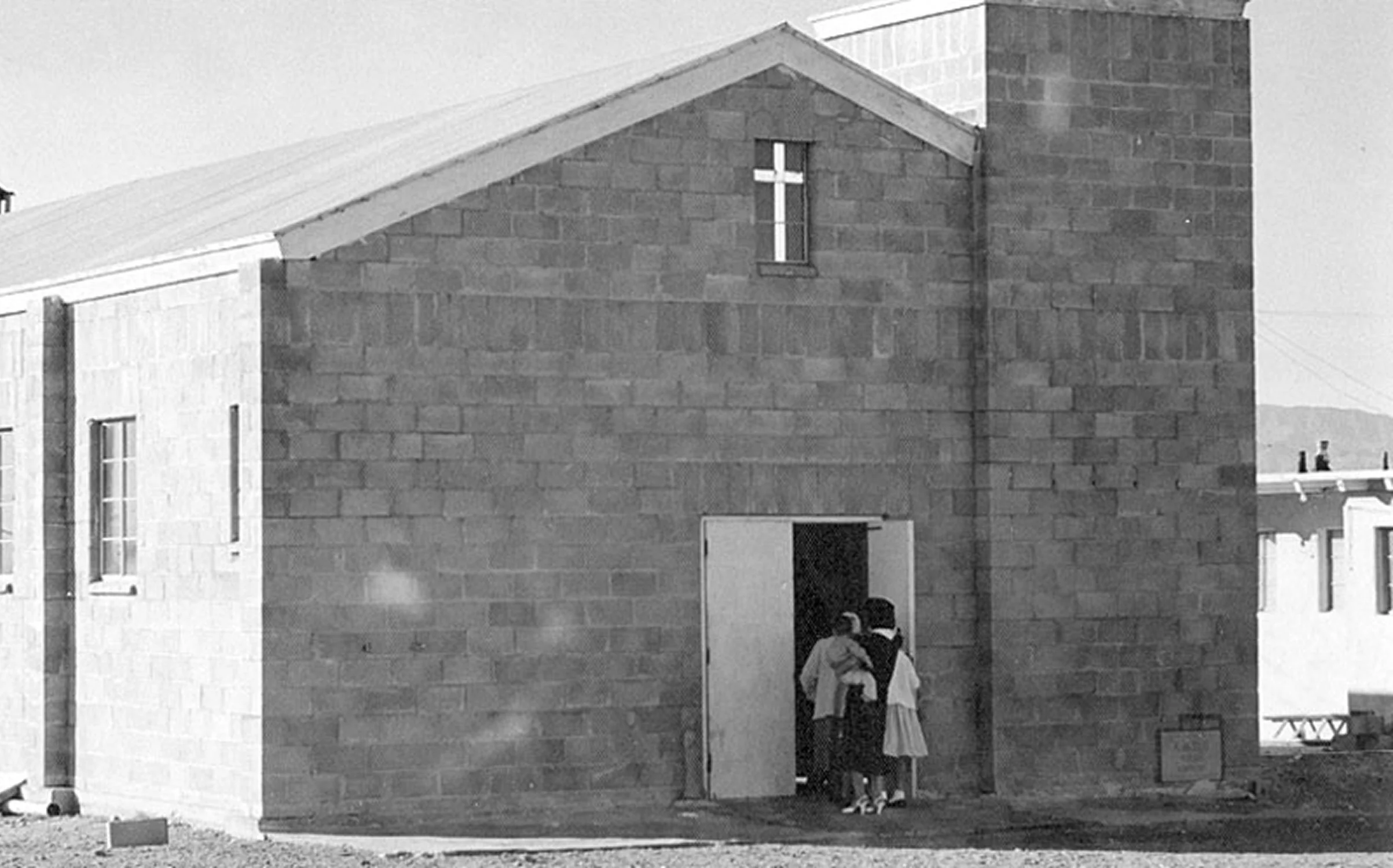
St. Raymond's Catholic Church, Amboy, 1959 — the same year Roy's iconic sign went up. The church still stands, now used for storage.
Roy’s boomerang sign today. Installed in 1959, it remains one of the most recognizable landmarks on Route 66.
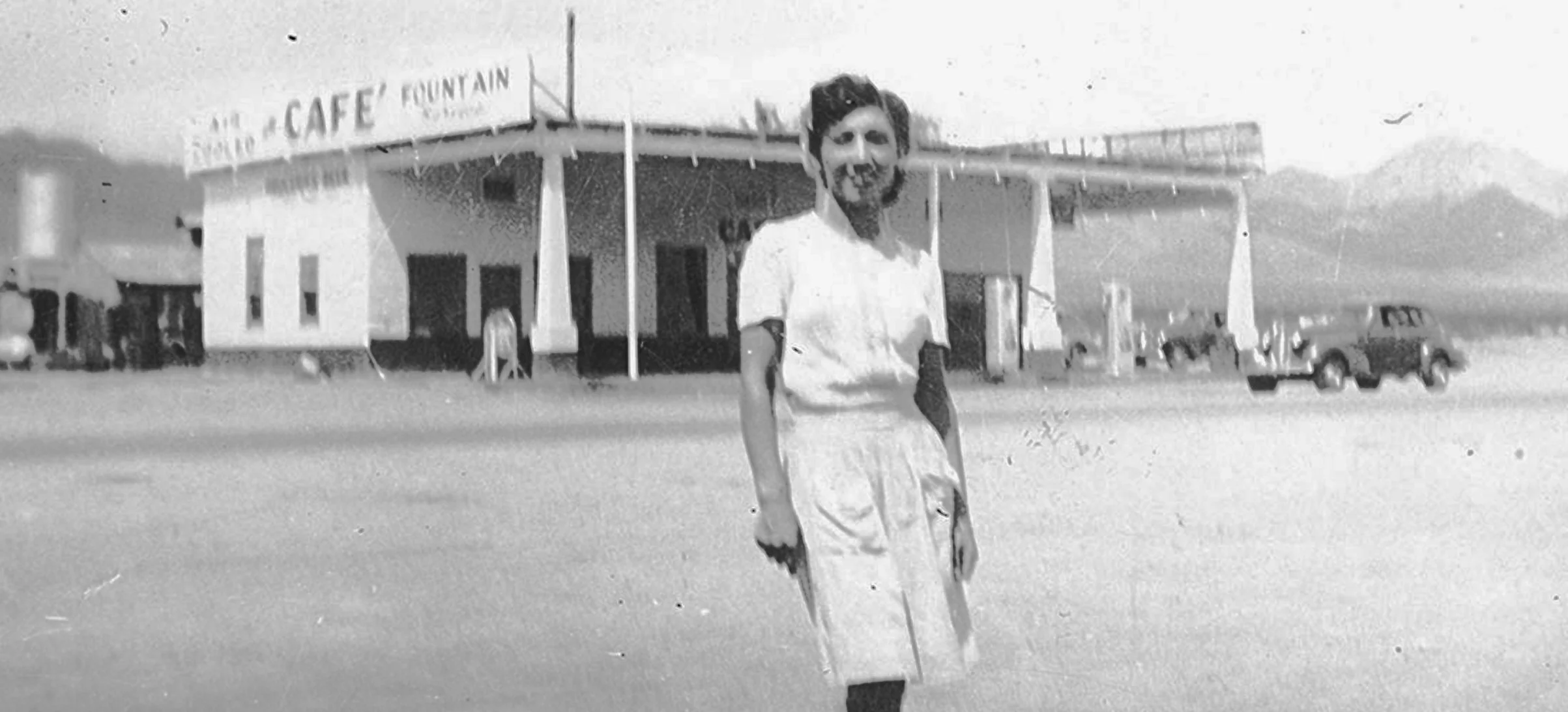
Roy’s before the neon sign. The business began as a modest roadside stop before growing into Amboy’s economic center.
1972
Interstate 40 opens. Amboy is bypassed
When Interstate 40 opened in 1972 and rerouted traffic seventeen miles south, it didn't slow Amboy down gradually. It stopped the town almost overnight. Families left. Businesses closed.
Buster Burris became the sole owner of almost everything that remained. He bulldozed many of the deteriorating structures himself, leaving only Roy's, the post office, the school, the church, the airport, and a handful of residential buildings.
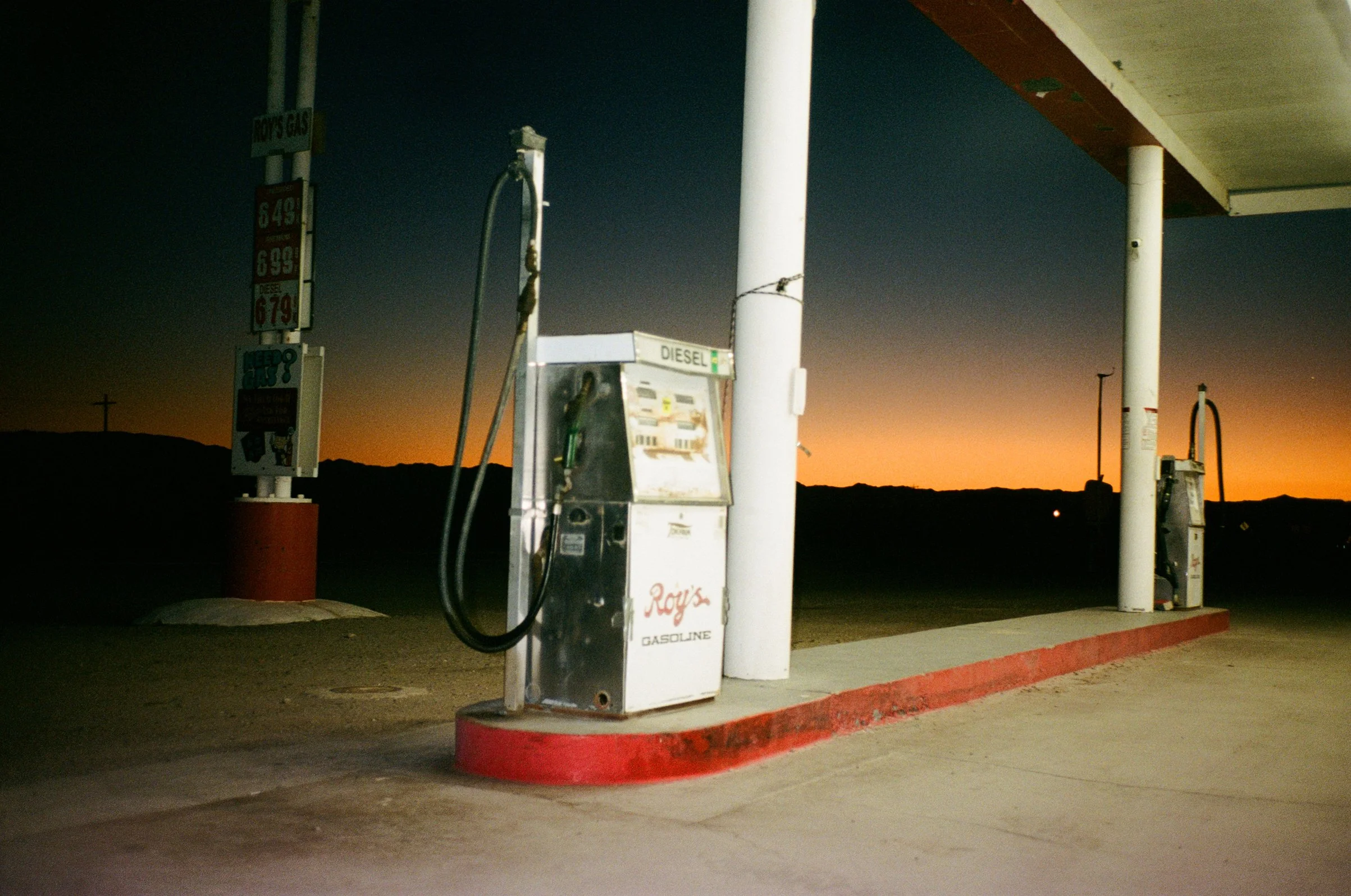
Roy's gas pumps at dusk. The station kept selling fuel through the decades even as Amboy emptied around it.
Early 1990s
Buster Burris puts the town up for sale
Herman "Buster" Burris spent fifty years in Amboy. By the early 1990s he was in his eighties and the moment he had been waiting for had not come. He put the entire town on the market for $2.5 million.
The asking price included the café, the motel, the gas station, three homes, a post office, an airplane hangar, two steel water towers, and forty acres. He told the Los Angeles Times he figured his total inventory at around $6 million.
No buyer materialized immediately.
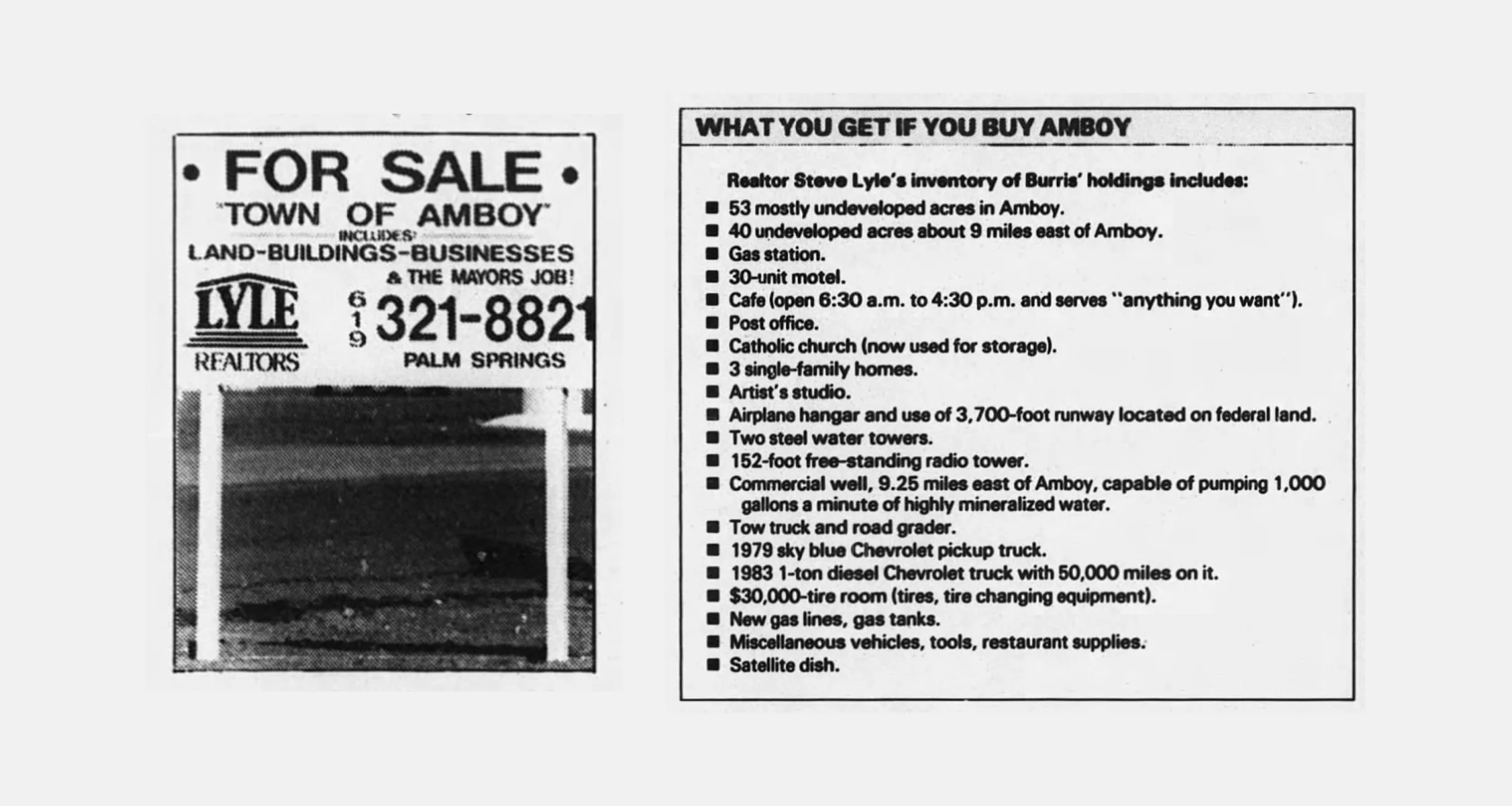
The listing Buster Burris ran when he put Amboy on the market. The inventory was specific down to a 1979 sky blue Chevrolet pickup truck with 50,000 miles on it.
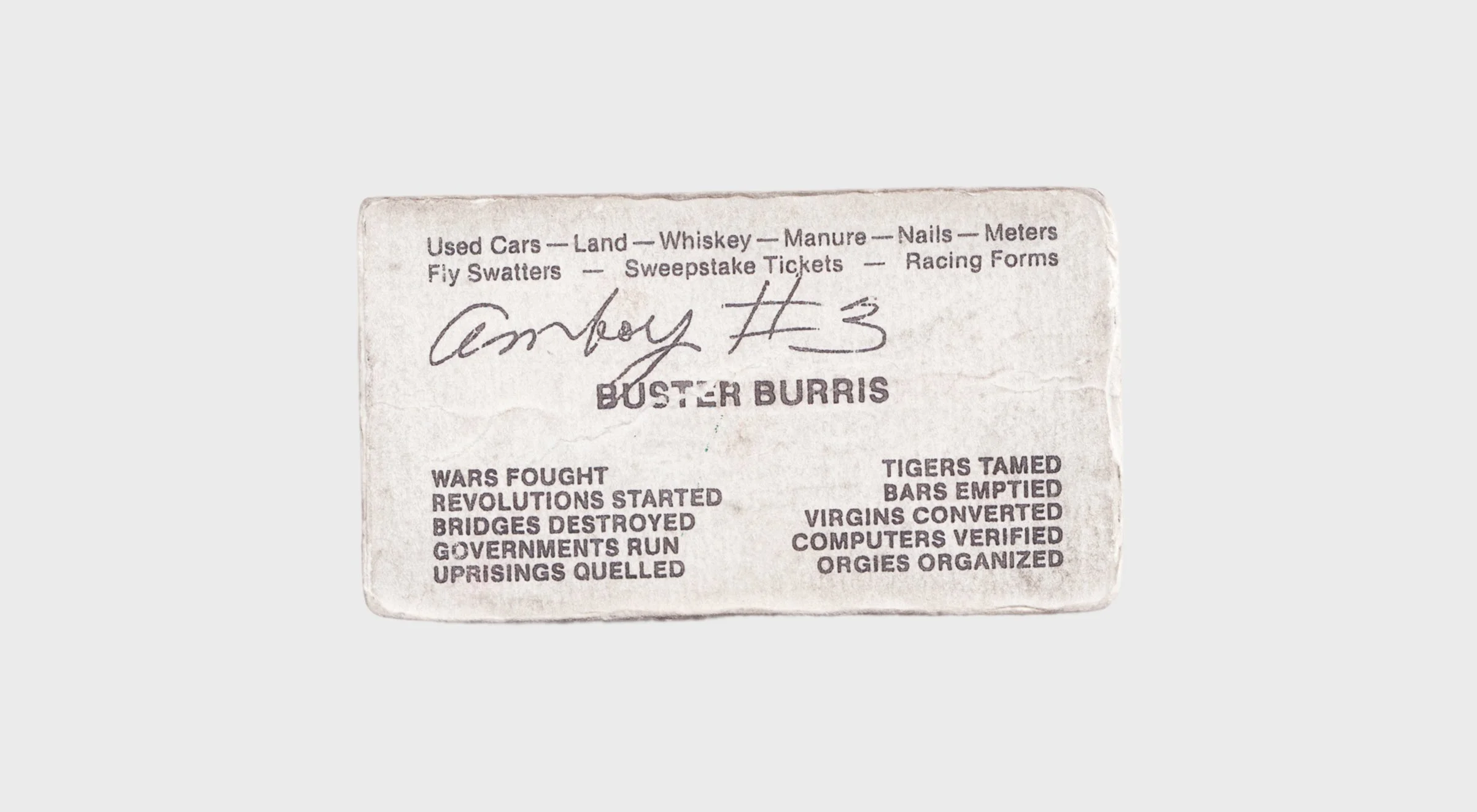
Herman “Buster” Burris wore many hats. As Amboy’s population dwindled, he became the town’s primary steward.
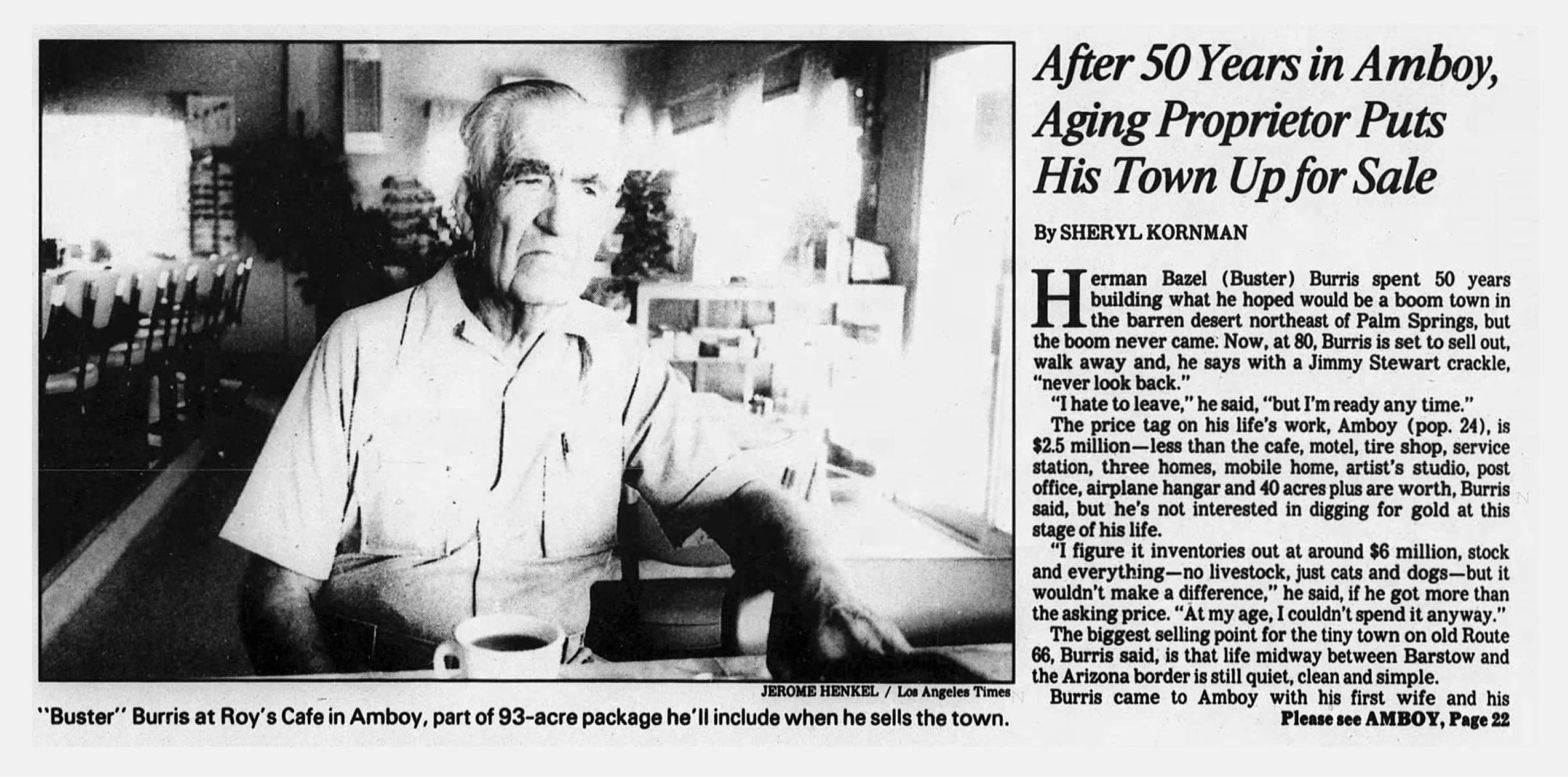
Los Angeles Times
1999
Amboy School closes
The Amboy School closed its doors in 1999, ending nearly a century of continuous operation. At its peak it ran from first through eighth grade. Graduates went on to high school in Needles, sixty miles east.
By the time it closed, there were not enough children left in Amboy to keep it open.
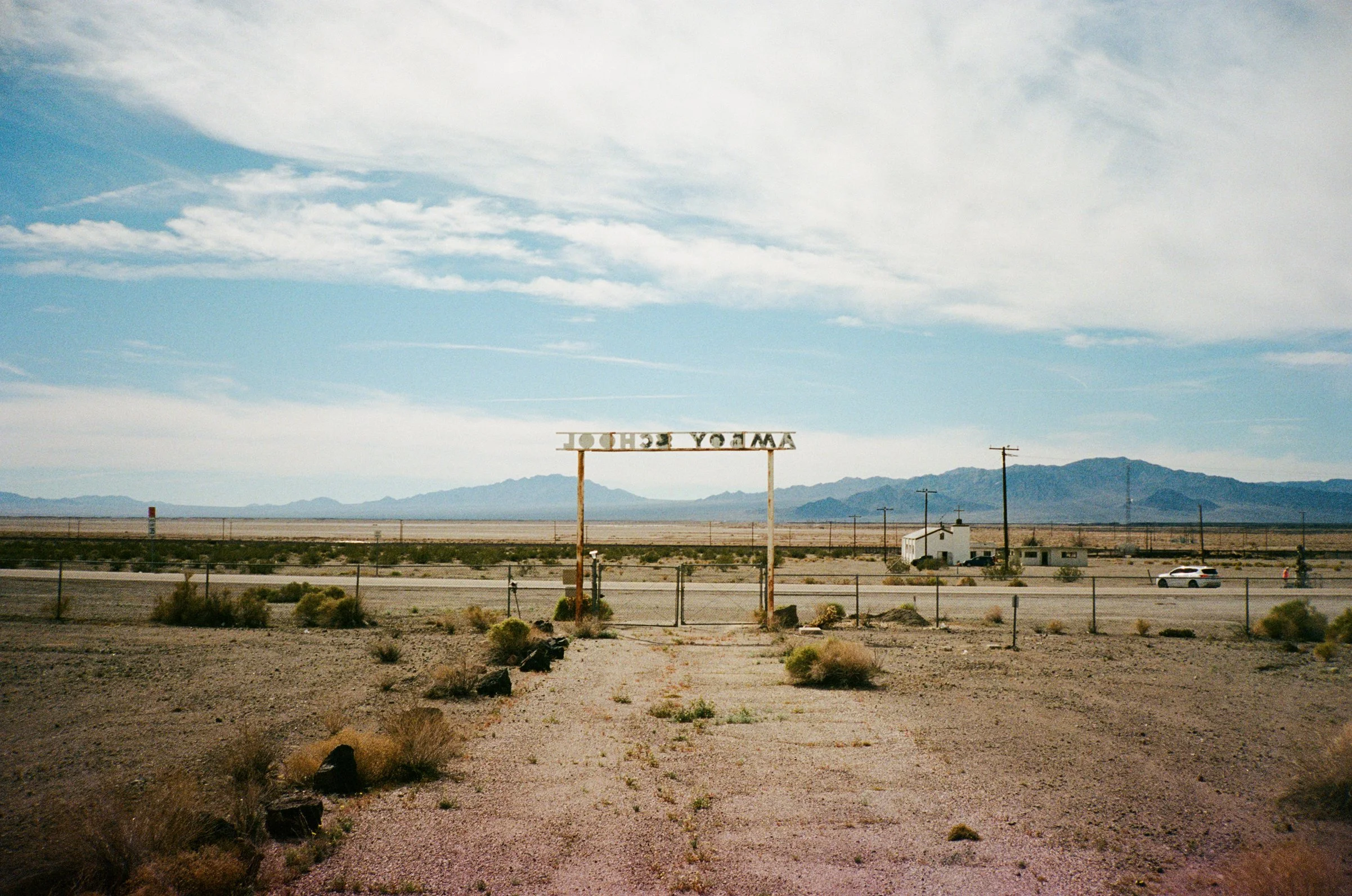
The former Amboy School. Although the town has changed hands, the building remains owned by the Needles Unified School District.
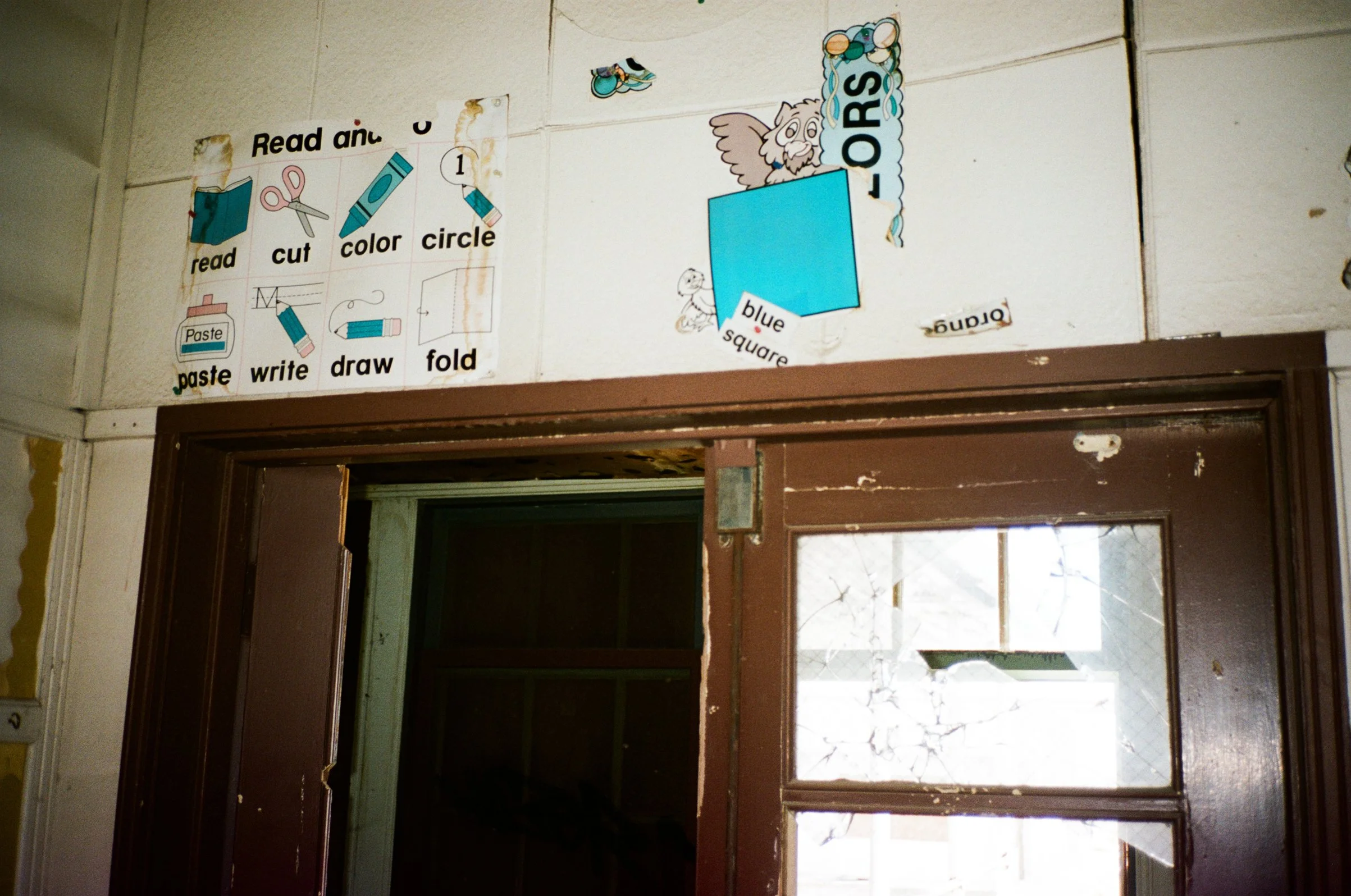
The former Amboy School in 1999 after nearly a century of operation.
2005
Albert Okura buys Amboy
In 2005, Albert Okura, founder of Juan Pollo and owner of the original McDonald’s site in San Bernardino, purchased Amboy for $425,000. Where others saw a ghost town, Okura saw a piece of Route 66 history that still had a future.
He reopened the gas station, stabilized parts of Roy’s, and began slowly bringing visitors back to a place that had nearly disappeared from the map.
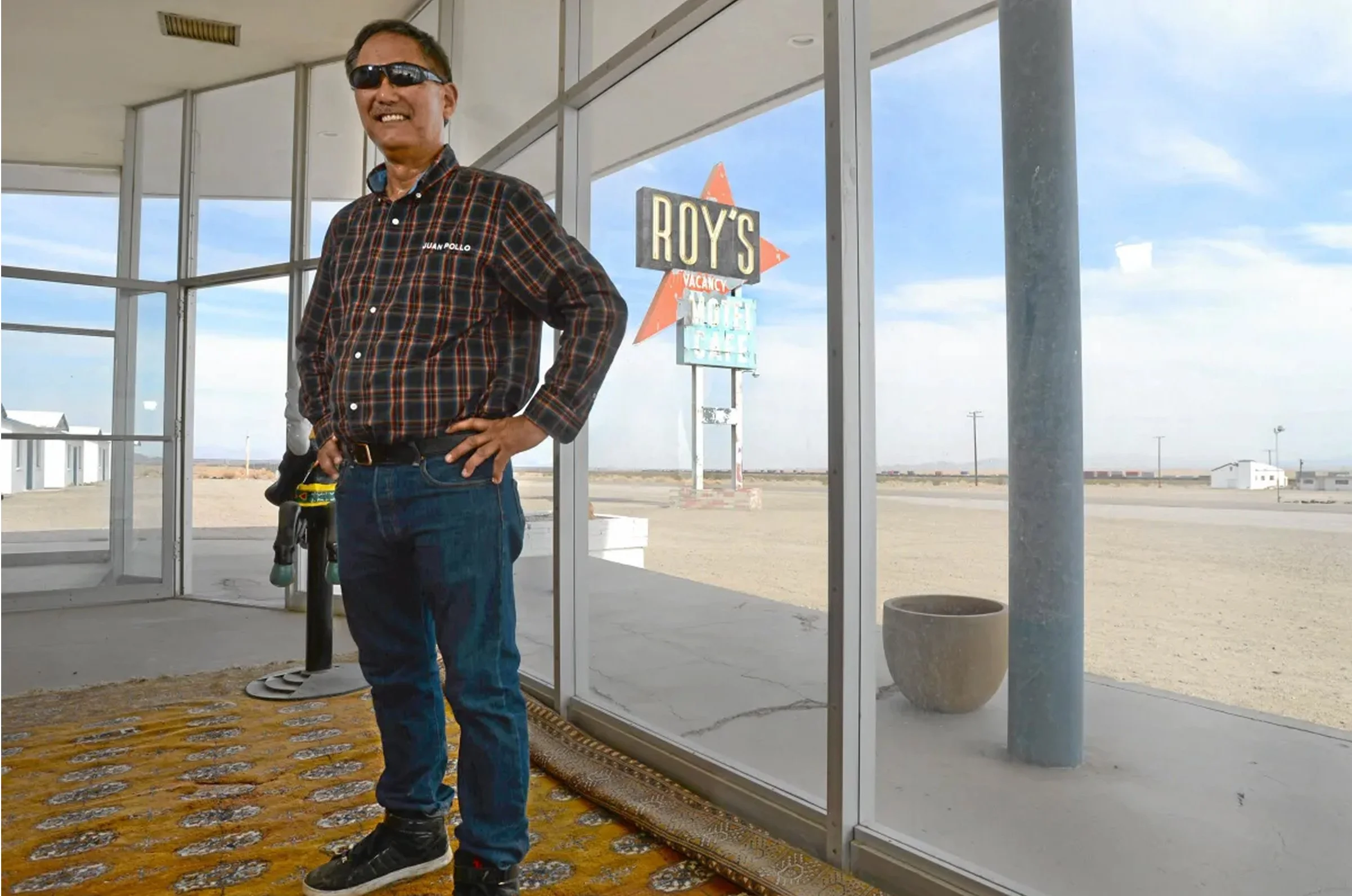
Albert Okura inside Roy’s Motel & Café after purchasing Amboy in 2005. Photo by Kurt Miller / The San Bernardino Sun, 2014.
2019
Roy’s Sign Relit
The relighting of Roy’s iconic neon sign marked one of the most visible milestones in Amboy’s revival. Hundreds gathered in the desert for a fly-in and community celebration as the sign illuminated once again for the first time in years.
For many Route 66 advocates, it became proof that Amboy’s restoration was no longer an idea but a reality.
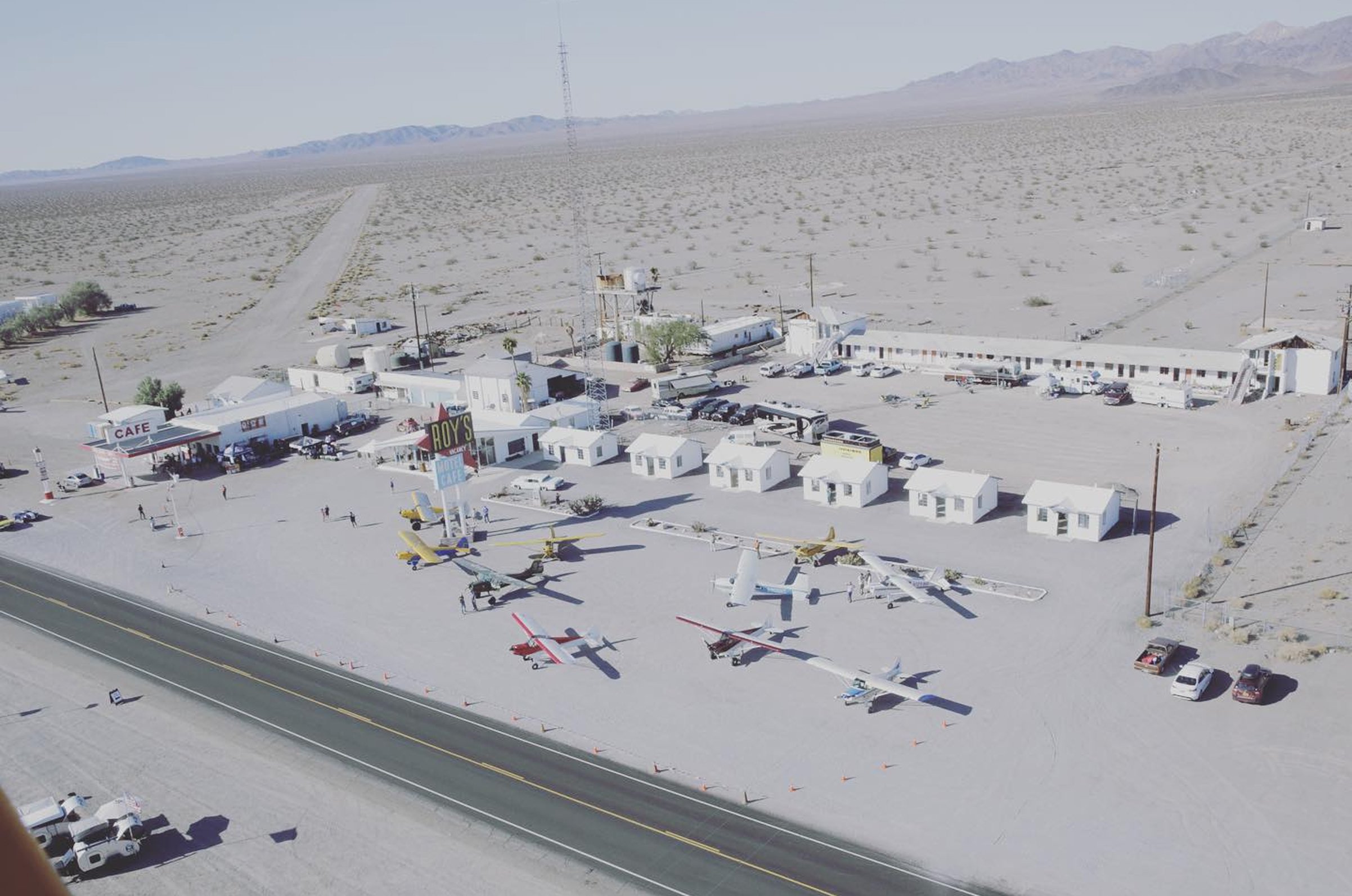
Aircraft gather in Amboy for the 2019 relighting celebration. What began as a neon restoration became one of the largest public gatherings in the town’s modern history.
Visitors count down as Roy’s iconic neon sign illuminates once again.
2022
Albert Okura Passes Away
Albert Okura passed in 2022 after spending seventeen years restoring Amboy. His work preserved one of Route 66’s most recognizable landmarks and laid the foundation for the town’s next chapter.
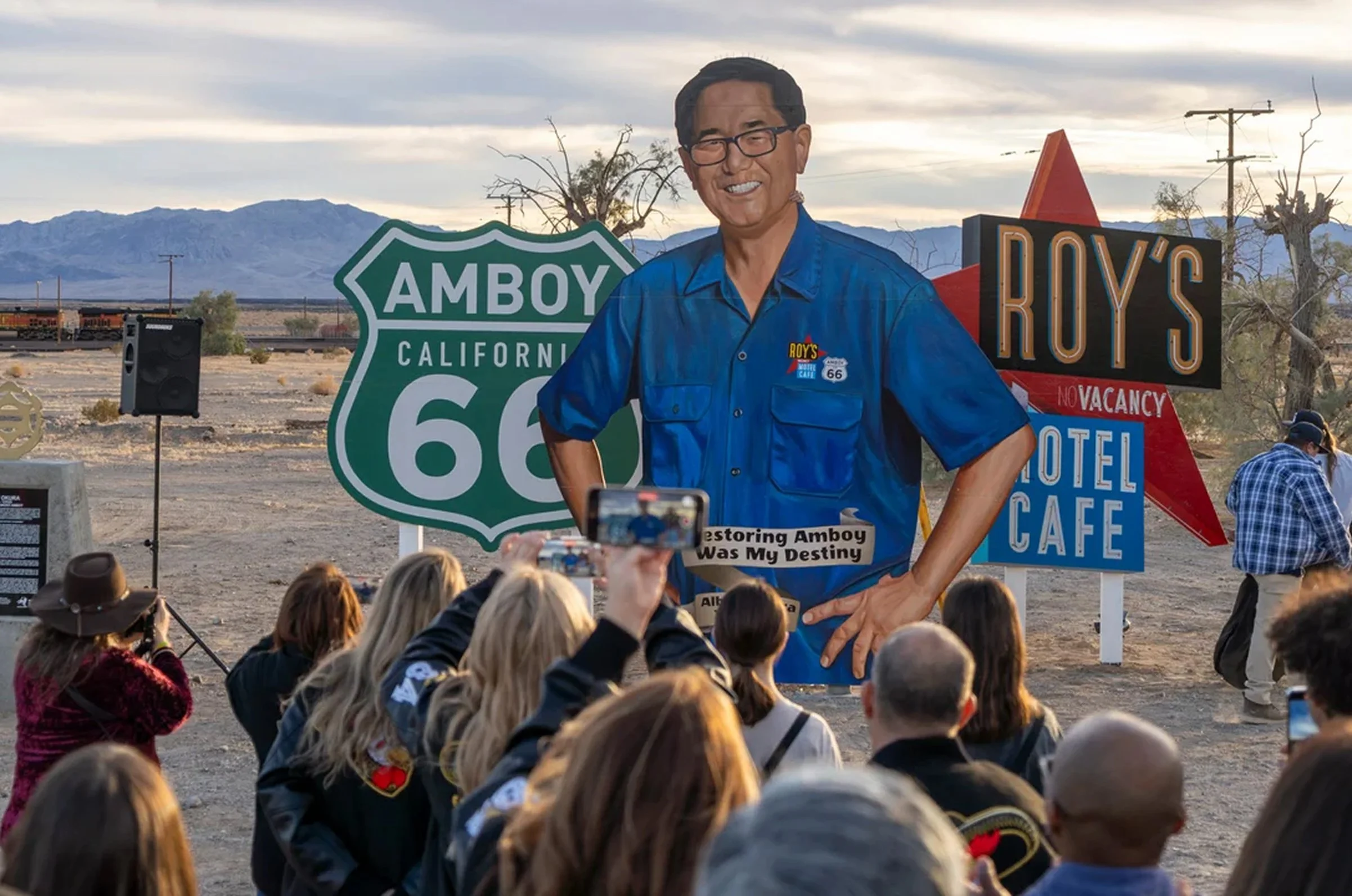
A monument honoring Albert Okura was dedicated in Amboy following his death in 2022. The inscription reads: “The Man Who Saved Amboy.”
2023
A Vision Realized
Many of the infrastructure projects Albert Okura spent years pursuing were completed in 2023, including new septic systems, upgraded electrical service, and improvements that moved the motel cottages closer to reopening. Combined with growing tourism, public events, and renewed investment, the projects marked a turning point.
One year after Albert’s death, Amboy was beginning to function less like a ghost town and more like a destination once again.
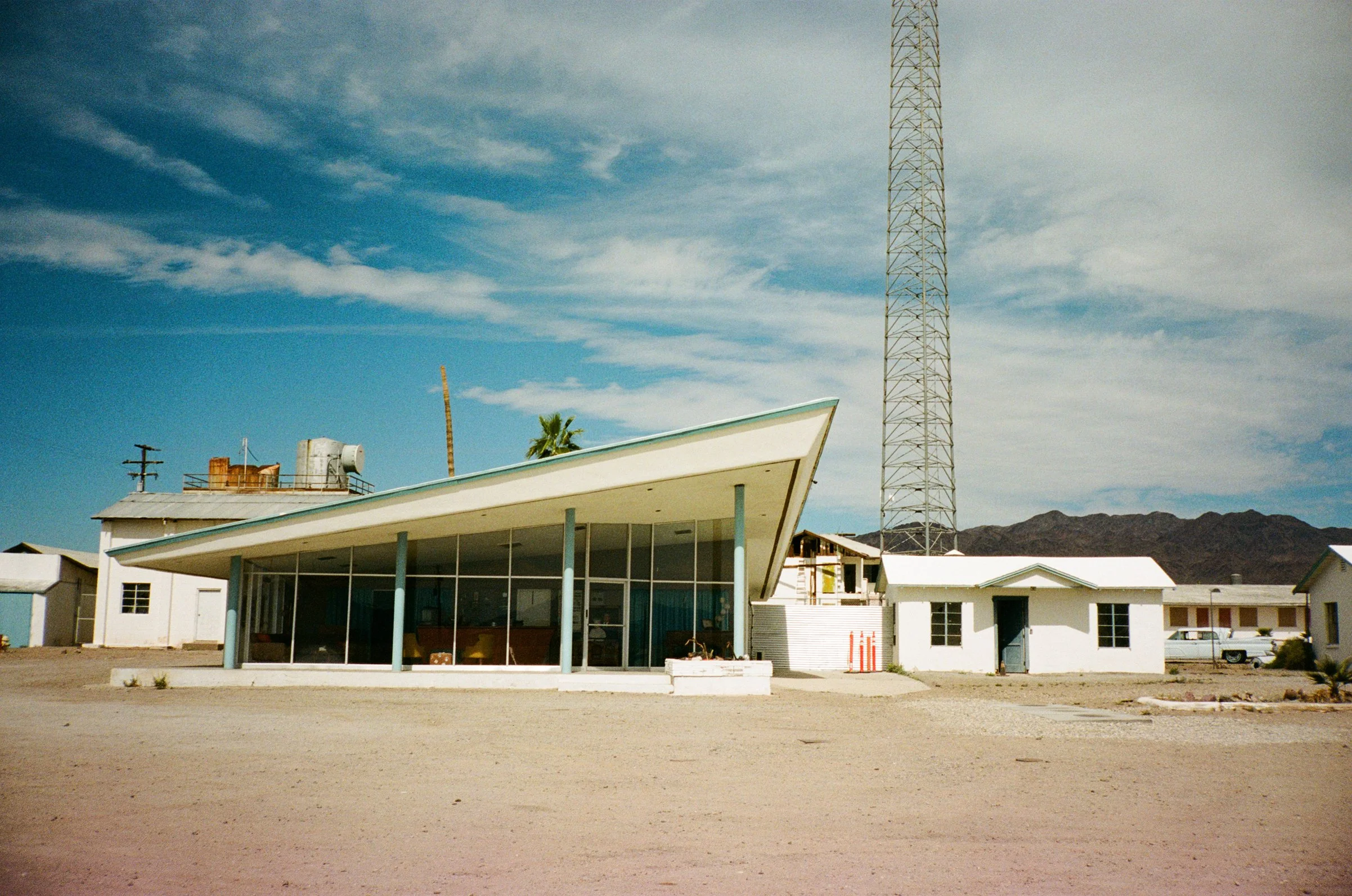
Roy’s reception building and motel complex.
Present Day
The Work Continues
Today Amboy remains an active restoration project. Under the stewardship of Kyle Okura and manager Ken Large, work continues on infrastructure, utilities, motel cottages, and long-term water solutions designed to secure the town’s future for another generation.
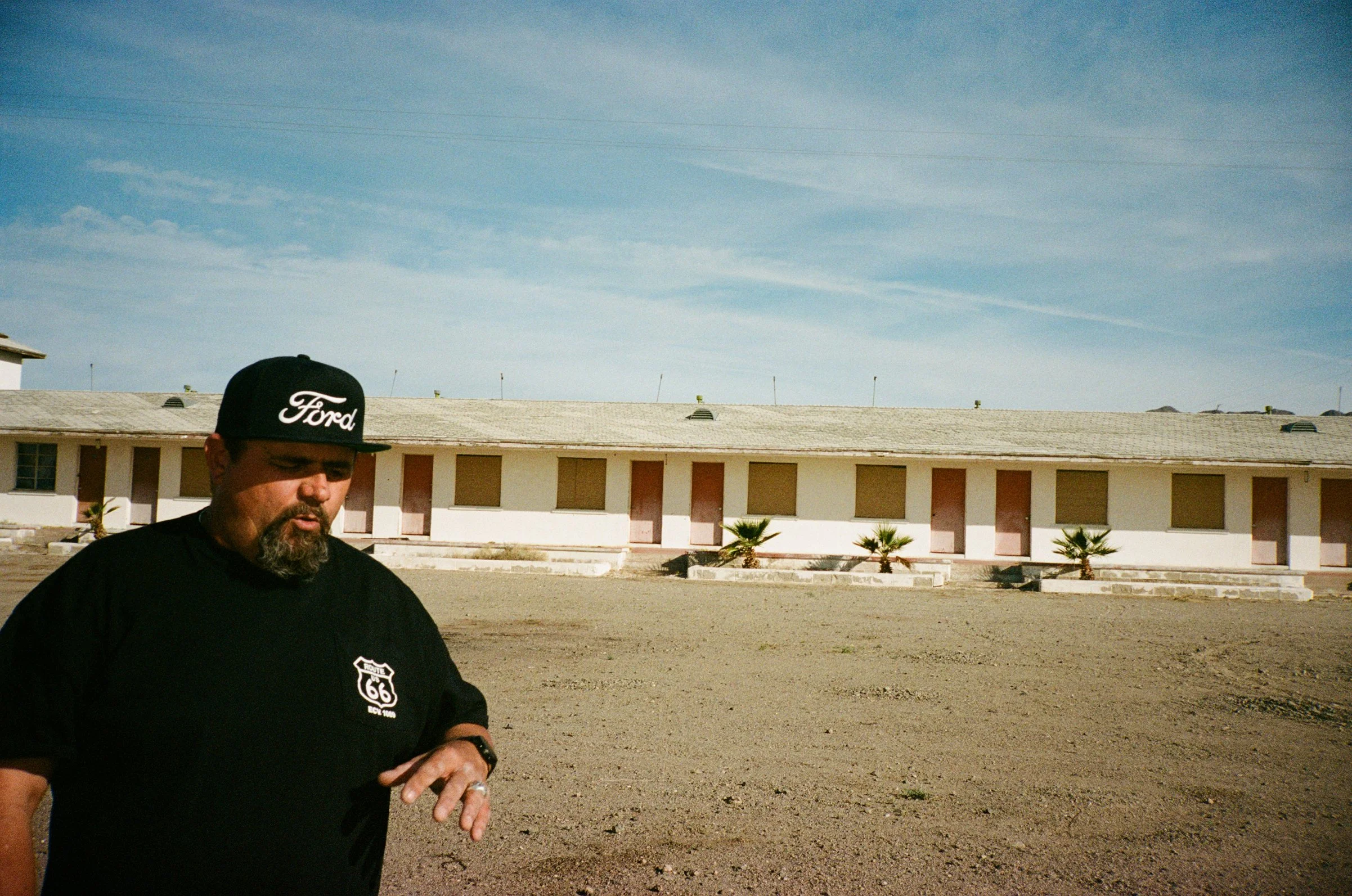
Ken Large in front of Amboy’s motel cottages. Nearly twenty years after Albert Okura purchased the town, the work of keeping Amboy alive continues one project at a time.